

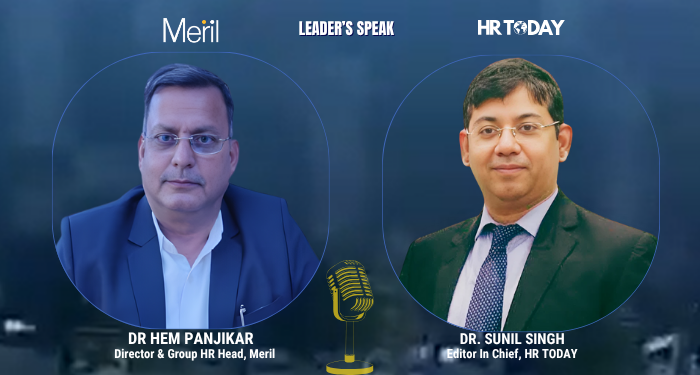
In an era where organizations chase credentials and quick wins, Dr. Hem Panjikar, Director & Group HR Head at Meril, stands out as a leader who believes in building people, not pedigrees. In a candid conversation with Dr. Sunil Singh, Editor-in-Chief of HR TODAY, Dr. Panjikar shares his philosophy of nurturing talent through values, integrity, and trust — principles that have guided Meril’s rise into a globally respected healthcare technology group.
This insightful dialogue, part of HR TODAY’s Leaders Speak series, unpacks how Dr. Panjikar’s three-decade-long HR journey — from Unilever to Meril — shaped a people-first culture that balances business growth with human connection.
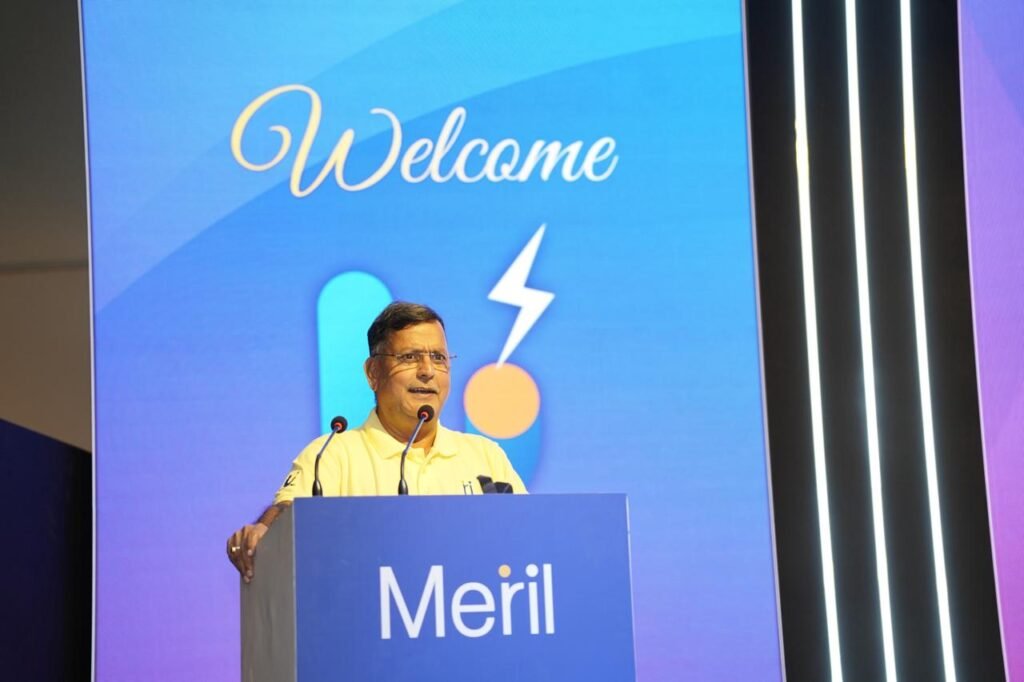
1. Building Value through People, Not Pedigree
Q:- You’ve often emphasized that you “don’t just invest in Harvard-educated people, but also in those who may be less educated but more committed.” How did this philosophy shape Meril’s talent strategy and organizational culture over the years?
A:- Meril’s talent strategy is simple: we value experience, commitment, and passion more than pedigree or the name of an institution. People may start slowly when they join, but within our cultural framework, their inherent passion and commitment help them grow into long-term, high-performing employees. This approach also naturally filters out highly ambitious talent who might change jobs at the drop of a hat.
This doesn’t mean we overlook education, but we focus more on aptitude and attitude. As a result, many employees, especially at mid- and senior-level positions, stay with Meril for a long time. They feel part of the family and confident about their future.
2. Commitment vs. Capability – Finding the Right Balance
Q:- In a fast-growing global organization like Meril, how do you balance the need for technical excellence with the value of commitment and long-term alignment?
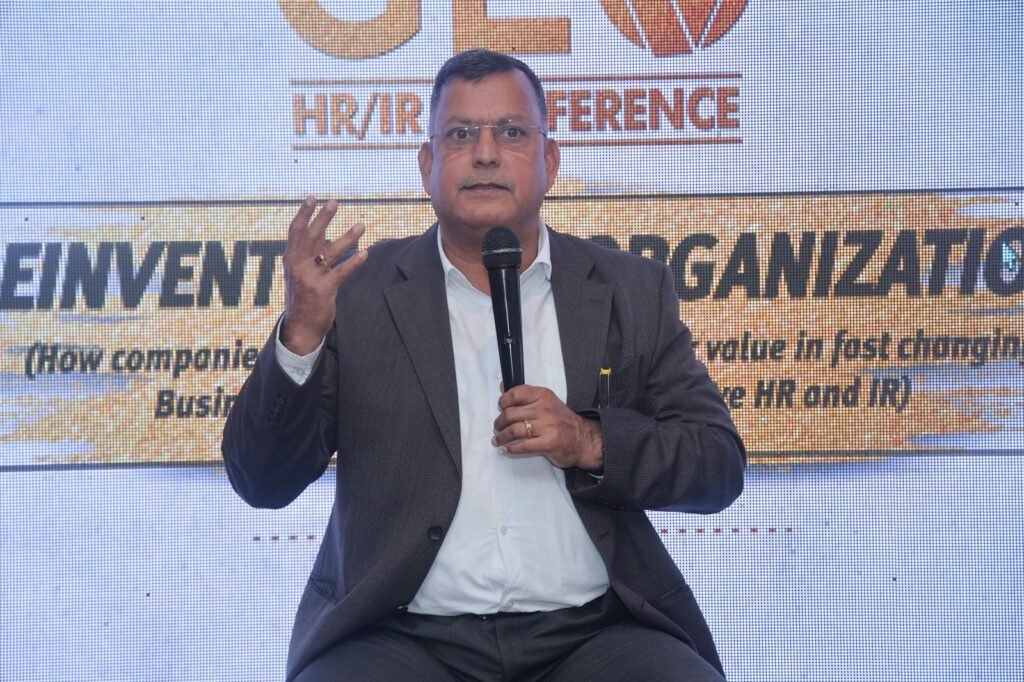
A:- Striking the right balance between technical excellence and long-term commitment can be challenging. At Meril, we have developed our own internal mechanisms to gauge a candidate’s level of commitment. Tools like the Meril Aptitude Test, Meril Sales Qualification Tool, and Individual Learning Style Identifier help ensure that capability goes hand-in-hand with dedication.
In simple terms, we look for the right kind of experience in a similar field and then use these tools to identify the best fit—someone who not only has the skills but is also aligned with our long-term vision.
3. Creating an HR Ecosystem beyond Policies and Processes
Q:- You’ve mentioned that “relationships with people create value, not always process and policy.” How did you embed this belief into Meril’s HR framework while still ensuring structure and accountability?
A:- Meril’s HR framework balance’s structure and accountability. Our systems and processes are aligned with business delivery, yet flexible enough to adapt to changing needs. Open and transparent communication plays a key role, fostering strong relationships with employees while keeping HR policies relevant and practical.
For us, creating value through relationships means empowering employees to focus on business outcomes rather than being constrained by rigid policies. This approach ensures that people, not just processes, drive success.
4. Integrity and Leadership in Building Organizational Value
Q:- You’ve said that the integrity of the top management creates value. Could you elaborate on how leadership integrity has influenced Meril’s growth journey and employee trust?
A:- Integrity is a core competency for top management at Meril—it means doing what you say and saying what you do, in other words, walking the talk. The fundamentals of how we do business remain consistent over decades, providing predictability in leadership decisions and clarity for employees. This consistency builds strong trust in Meril’s management and is a key reason behind our sustained growth and the long tenure of our employees.
“Integrity is doing what you say and saying what you do — that consistency builds trust and sustains growth.”
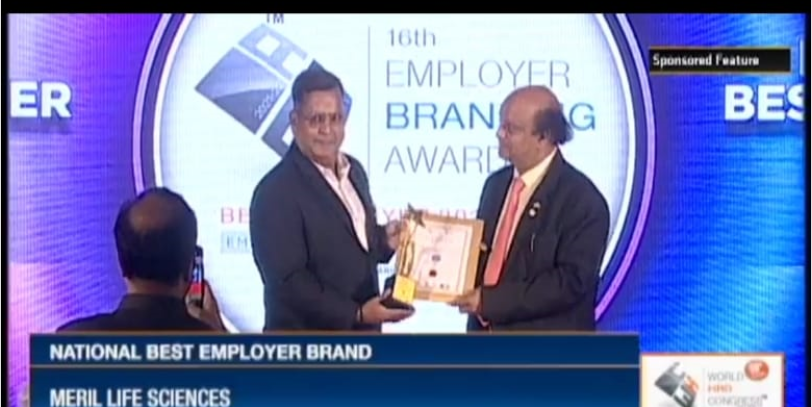
5. Global HR Architecture and Cultural Integration
Q:- With Meril’s growing global footprint, how did you approach building a unified HR strategy across geographies, especially in Global Talent Acquisition, Supply Chain HR, and Sales HR management?
A:- Creating a unified framework for managing global talent is indeed challenging. With a presence in over 150 countries and employees across diverse subsidiaries, aligning mindsets and go-to-market strategies across different cultures is no small task.
At Meril, we have developed a global HR architecture that aligns people with our credo, strategic imperatives, mission, vision, DNA, and success mantras. This framework is communicated repeatedly to employees, fostering a shared mindset and a sense of ownership—so that every employee feels, “Meril is my company.”
6. The Human Element in AI and Digital HR Transformation
Q:- In your recent conversation with LinkedIn Talent Solutions, you spoke about how AI has strengthened Meril’s talent strategy. How do you see technology complementing, not replacing, the human touch in HR?
A:- In my view, technology is an enabler of the human touch in HR, especially at Meril. We use Zoho as our core digital HR platform—not just for delivering HR services, but also for talent acquisition and performance management. AI tools from platforms like LinkedIn and Naukri are integrated with Zoho to ensure faster turnaround times and error-free HR service delivery.
On the ground, AI-enabled cameras with facial recognition help maintain discipline and productivity, while tools like Route IQ, integrated with Zoho CRM, ensure that any deviations reach decision-makers in real time. Technology, in this way, complements our human efforts rather than replacing them, allowing us to focus on meaningful engagement and strategic decision-making.
7. Leadership Development and the “Safe Workplace” Mindset
Q:- You’ve beautifully described that people are not wet towels to be squeezed, and leaders must create safe workplaces where employees can accept mistakes. How have you institutionalized this mindset among Meril’s leaders and managers?
A:- From the very beginning, we make it clear to prospective candidates that Meril is for those thinking of a long-term career. We have a policy of not terminating employees for minor mistakes, occasional non-performance, or feedback from immediate supervisors.
All employees are treated fairly and have open channels to communicate grievances directly to top management. We have exemplified this approach for over two decades, giving employees a strong sense of job security. At Meril, we believe that when employees feel secure and happy, their performance naturally improves—and this principle guides actions at every level of the organization.
“People are not wet towels to be squeezed — a safe workplace is one where mistakes are accepted and learning is celebrated.”
8. Lessons from Your Journey – From Unilever to Meril
Q:- Your experience spans Voltas, Huhtamaki, Reliance, Unilever, and now Meril for over 17 years. What key leadership lessons from your early career still guide your HR approach today?
A:- Even before my corporate career, I had the opportunity to serve in the Border Security Force (BSF) for seven years, leading 136 combat-ready troops on both border and internal security duties. Surprisingly, the lessons I learned there translated perfectly into my corporate journey.
I learned that employees, like troops, are human beings—you need to treat them as such and listen with empathy. You must communicate clearly what is expected, provide the necessary training and tools, and ensure that rewards and consequences are based solely on performance, without any bias of caste, creed, or religion. This leadership approach has guided me across all companies I’ve worked with and was fully integrated while creating the HR framework at Meril.
9. Managing Growth and Sustaining Values
Q:- Over nearly two decades at Meril, how have you ensured that rapid growth and global expansion don’t dilute the company’s founding values of integrity, empathy, and innovation?
A:- Sustaining the values of an organization is a continuous process, and everyone—from the chairman to the doormen—needs to be aligned. As I mentioned earlier, we hire people who share our mindset and competencies. Over time, they absorb Meril’s values and, in turn, become guiding lights for the next generations of employees.
10. Your Message to Emerging HR Leaders
Q:- Finally, what advice would you offer to young HR professionals who aspire to build organizations driven by values, people-centric leadership, and long-term sustainability?
A:- What I often see in the younger generation is an urge for quick results and rapid career growth. I want to remind them that Rome wasn’t built in a day—and neither is a solid career. While hopping jobs may bring quick salary hikes or positions, it cannot replace the depth of experience gained by staying with one company.
When you invest time in planting ideas and nurturing them within an organization, you witness their growth and impact in real time. This brings far greater satisfaction, learning, and long-term benefits. My advice to emerging HR leaders: believe in yourself, invest your time wisely, grow the business, and in the process, you will gain experience, confidence, and lasting success.
Read Also : From Policy to Purpose – Amit Prasad’s Blueprint for Inclusive HR at Hettich
Ishita Agghi, Co-Founder of CLIKD, on Building Career Discovery Tools for the Next Generation
Leading with Purpose: HR Transformation and Nation-Building with Dr. Vinay Ranjan, Director (HR), Coal India Limited
Empowering People, Driving Innovation: Shikha Rai on Canon India’s Future-Ready HR Transformation
Ruchi Mago, Head – Human Resources and Employee Experience at Orange Business – India explains “Embracing the Quotients of the Future”
Ashutosh Sinha, Managing Partner & Chief People Officer at Seintiv Talent Solutions, Decodes Gen Z and the Future of Work
Click Here to Join HR TODAY WhatsApp Channel