

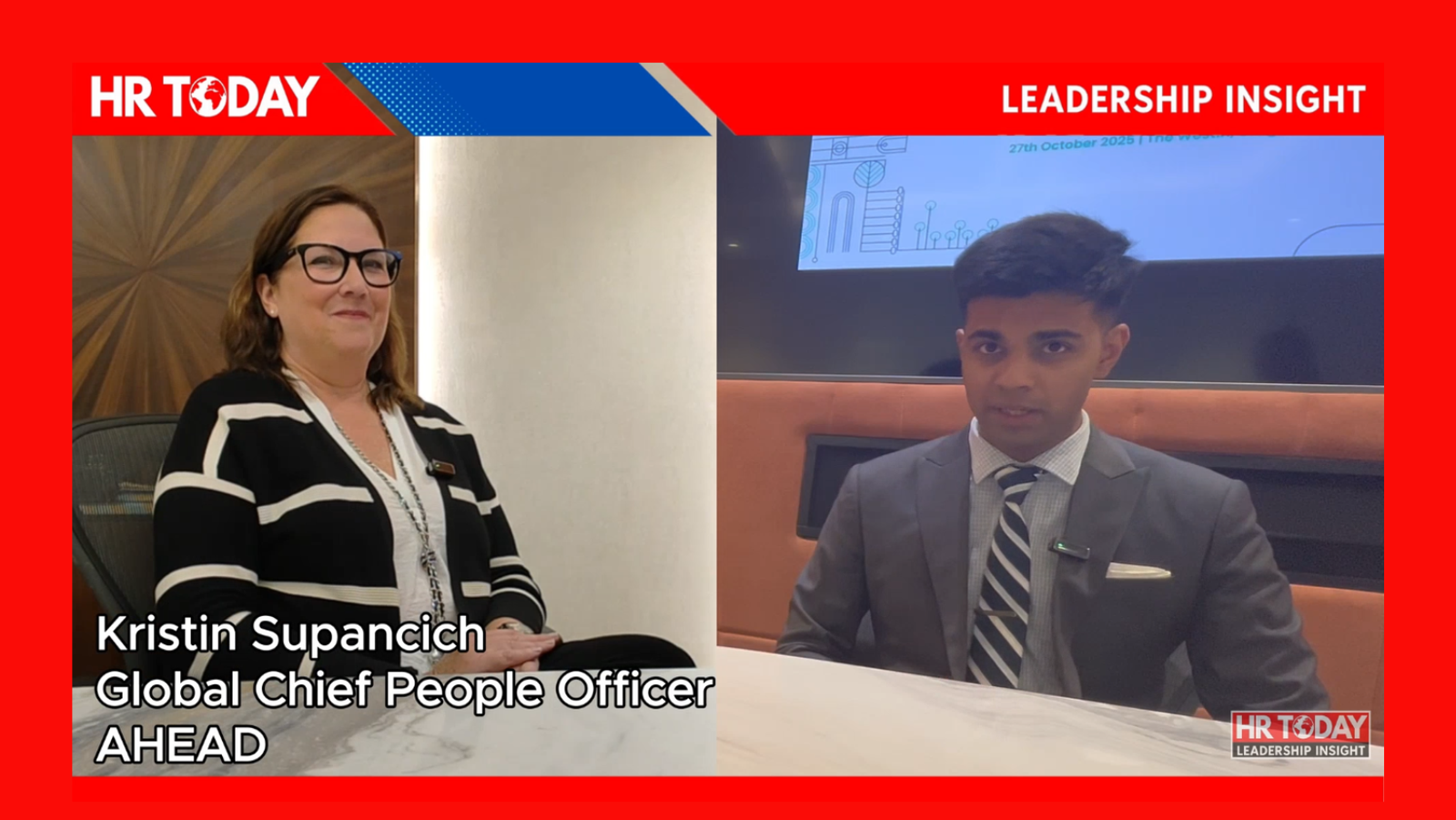
In this episode of the HR TODAY Leadership Insight Podcast, Kristin Supancich, Global Chief People Officer at AHEAD, sits down with Ashish Michael Chauhan, Podcast Director at HR TODAY. Together, they explore Kristin’s inspiring HR journey, her perspectives on building inclusive workplace cultures, navigating global leadership challenges, and preparing organizations for the future of work.
Ashish: Greetings, everybody. And welcome to another episode of hr, today’s Leadership Insight, a podcast series brought to you by HR today, where we bring to you some of the most prominent and proficient personalities in the corporate world and voices that shape the future of work. Today we are privileged and thrilled to have with us Ms. Kristin, who is the Chief People Officer at the head. Kristin, hi. Hi. Nice to see you. Nice to see you as. Welcome to podcast. Thank you. And India. to start with, what excites you most about being in India and connecting with the India team of ahead?
Kristin: I love my trips here. I usually get to come here twice a year.
Kristin: And I just find the employees and the people here welcoming, and warm that it’s always a joy and I’m always learning something new when I’m here. whether they want to share something with me about their families or about the food they , or the type of work that they’re doing, it’s always a special time.
Ashish: , you have led and transformed organizations across conference from Adecco to Kelly Home Point, and now you’re at ahead. How has this extensive experience across HR functions shaped your HR philosophy, and how does that help you deal with people better?
Kristin: I started my career in the, what I call in the business. I was in workforce solutions for many, many years. recruiting, staffing, outsourcing, things of that nature before I went into the CPO role. And what it taught me over years is that it’s always about the people, right? You can have a great technology; you can have a great strategy. You can have a great plan, but if you don’t have good people around you, that are willing to take things forward and execute and feel empowered to make decisions, then it doesn’t work. Because you’re only one person as the leader. I found that the people are really, really important, even in today’s world of dramatically changing workforce, workforce situations and, and future of work as we talked about. it’s interesting that you. Bring the people aspect of working in a company an MNC.
Ashish: How do you feel that organizations across the world, MNCs, and maybe companies in India are ignoring the people aspect and maybe just focusing on the business aspect. do you think that’s a good approach and do you think that it has maybe. Stagnated, the growth of those organizations. Do you feel that?
Kristin: Yeah, I think that, my experience globally would tell me that the most successful businesses have a great strategy and business plan, right. With outstanding people. I, think you can have the best business plan in the world, right? But if you’re not focused on the people, and especially in 2025, I’ve been doing this, I hate to admit, for, over 30 years.
And I think early on you could get away with it being about the business strategy and the people mattered, but maybe they weren’t the highest priority. Right? In today’s world where dramatic change. Four or five generations in the workforce. Employees are demanding that we communicate with them, that we’re authentic with them, that we help them understand what the goal is, right?
I find the most successful companies that I’ve been able to either work with internally or we’re a customer of mine. They thought about the impact on the people and they were intentional about planning of how to align and connect them to the strategy that their ICA impact could be even greater.
Right? And that’s kind of the way I’ve managed my teams, and I think the most successful companies do that. Right. They may have a short lift win, we’ve seen lots of companies, especially technology companies that maybe weren’t the greatest to their people, but they had an incredible, idea or innovation.
And they did really for a short time, but if they don’t focus on the people, it’s not sustainable, in my opinion. Right. Again, generalization. But I think for most companies that would be true.
Ashish: A very important keyword that you just used is sustainable. a lot of organizations and a lot of companies talk about sustainable growth, sustainable development in terms of environment. How do you maybe see sustainability in terms of HR? And how do you maybe bring that from your policies and you as a global CHRO of ahead? how do you bring that?
Kristin: Yeah, I think about sustainability as every company wants to grow, but they want to grow year over year. In a way that is sustainable, which means it’s going to happen in long term. But I think most companies are also thinking it about what the best way is to grow. And are we being, I’m going to say, are we thinking about it in terms of what it means to the human factor to the environment?
To how we’re, taking care of our planet, whatever it may be. I’m thinking about it in terms of that. it may not be as simple as, okay, let’s make sure we have a recycling program. But what it does mean is if you were to come join ahead, I want to make sure that you’re going to be with us for a while.
How do I do that? I want to care and nurture you just I would anything else that you’re able to produce more. You are more innovative over time. You feel you can grow into a bigger leadership role. And I believe that, that my job as a CPO is to help create programs and an environment and a culture where that can happen.
Right? You need to want it and the employee wants to, needs to be able to nurture it, but we need to create an environment. Where people can grow and sustain with the company and we can retain them, right? Because we want, no one wants to turn their workforce over and be constantly recruiting, right?
For replacements. They want to train them, development and then be able to reap the benefit of them having more knowledge and skills.
Ashish: It’s interesting that you use the word environment and use the term environment in an internal setting. Yes. Whereas most companies or MNCs or people, working for sustainability, to speak, talk about the external environment, right. It’s interesting that you being a CPO would talk about environment of the organization.
Kristin: Yeah. It’s, and, and one of the thing, , I love the term when as now kind of in the industry, we’re starting to call these job Chief people officers, because the HR component of the human resources, the tactical, the administration, that has to happen because you’ve got a group of employees that need to be paid, they need to have benefits, they need to have, , things they need as a employee.
But the exciting part for me is around the people side. And I to also use the phrase, , what are we doing to build our own DNA?, and, and I think about that in terms of it very organically because I want people to feel a connection to our culture. I want them to feel a connection to their boss and want to go above and beyond for that person because they’re getting value out of it.
And to me it is kind of an organic. Sense versus I’m just a number and I’m a body sitting and doing this. It, I think of it in a much more, , larger connected way. If we go along your thing, kind of the tree that’s going to have roots, that’s going to grow down, I want people to feel they’re secure and they’re connected to the organization that they can grow and flourish.
Ashish: if I understand it correctly, for you, sustainability. It means internal and external impact, right? Yes. On people. Yes. That’s interesting. Yeah. And that’s something that you would hear from A CPO, right?
Kristin: Yeah. And I think that, all of us as companies are trying to figure out how we can protect the earth a little bit better and do certain things and, but I also see people as part of that environment.
And, and they’re the ones. Interacting with our clients. They’re the ones interacting with, what we call our partners or our third-party players. And if they’re not having good relationships and are easy to work with and don’t have good answers or solutions or have a sense of urgency, then our customers may not buy from us.
My job is to help make sure that we’re still growing as a company. We’re in a service industry; the people is an important part of what we do.
Ashish: You at AHEAD oversee the people ecosystem as you term it. Could you just elaborate on it a little?
Kristin: In our people ecosystem, we have what would start with, I call it kind of an employee life cycle. I think about it from the beginning of when we’re going to attract and recruit and bring in people through talent acquisition, we’re going to then effectively onboard them and get them integrated into the organization that they could be productive and feel valued and feel connected.
Then we’re going to also have an L&D team. I’m going to have a leadership and development team included in that is also employee, experience. I have a set of leaders that their job is to make sure that employees are engaged through employee resource groups, or we have a thing called Stories of Impact.
We’re a great place to work organization. We want people to have a positive experience and have their voice be heard. there’s a group that does that. I then have a group of, of leaders that are focused on, business being business partners. people, business partners. Their job is to work directly with the leaders.
And help their teams be the most effective that they can be. they might be dealing with tough situations. They might be coaching a lot, they might be guiding, they might be providing advice to some leaders that might have, a set of employees that they’re trying to develop. Work with challenges, things of that nature.
And they’re aligned by department areas, they really get to know that business. ’cause I want that group to be connected to the business. big thing my group will always hear is I, you need to know how we make money. You need to know how the business operates because then you can advise. And help leaders make better decisions and be their thought leader, thought partner with them.
Yes. there’s that piece of it. And then, there’s the general, I call it general, but the HR operations. I don’t call it benefits, anymore. Because I really think it’s the heart blood of what is all the back office things we have to do that are just table stakes. Does that make sense?
Things that have to happen, but I want them to be employee centric, I want my benefits people to always be available by phone if they need to be. People have difficult situations. They’ve got a surgery, they’ve got a child that’s sick. I want that to be a very human group.
Because those, our employees are struggling through something that they may need to help to make sure they’ve got the right benefits, information, those types of things. And then they also run all the data piece. , , we would have your typical HRIS system where single point of truth of when were you hired, what do you get paid, how much, what are your benefits, how much time do you have off those types of things.
And that’s kind of my core team in addition to, compensation. I have a group. Now that’s gonna start doing a lot more data analytics, to your point on your background, where I want the group to really crunch the data and look for trends to then give to those business partners. To be able to go and talk to their leader.
For example, I want them to be very proactive that says we go in, we may go into our data center and I want the person that works with the data center leader, my HR person, to be able to say, Hey, you’re having some attrition over here, or We seem to be having some lower engagement scores over here. Or we might be under rate underpay in this area, maybe under market.
And there’s a group that I don’t need that person to go find and create that data. I want the data group to produce it, let them use it, and then go have an educated conversation with the leader to say, okay, what do you want to do? Do you want to address this? Do we want to go a little bit longer? What is, how do you think about that?
I want them armed with information. I think about that as kind of this employee life cycle and at the end. Sometimes someone leaves and then I want them to come back in because maybe they return to us a few years later with some different experience. Right. And we nurture them along the way again.
When I first came to AHEAD, our CEO told me, hey, I know people are going to leave here. I can’t assume now as we grow, we’re almost 3000 employees that everyone’s going to stay with us forever. But what I do want them. To go away with is this was a great place to work. I learned a tremendous amount and have a positive experience that they can take with them.
If we do that, and that stayed with me, I’ve been ahead three years and I thought, what, then that’s my job. My job is to make sure that we’re doing those kinds of things that even at the end. They may have to go take an opportunity outside our walls, but they talk about us positively.
They’ve had a good experience. They’ve learned and grown, grown with us during the time that they were with us.
Ashish: That’s beautiful. And this mentality is, I think the top-down effect. And, it’s really engaging and , I felt got a little emotional that, that a company is much into how they treat their people and how their experience has been and even after they leave. You are still hopeful that they would one day come back again?
Kristin: Correct.
Ashish: Yeah. That’s, that’s really optimistic.
Kristin: Yes. And, and we do have that, or we actually have, , maybe it’s a sibling of theirs. Maybe it’s a child of theirs that, sees it says, I worked for that company six years ago, 10 years ago.
I had a great experience. I would definitely advocate and support you. Go back and talk to them. To me that means we’re doing something right.
Ashish: And that’s why it’s, I think, imperative for you guys to have Correct. Culture and environment of human humanity. Correct?
Kristin: Yep. Yeah.
Ashish: You talked about, stories of impact.
Has there been any particular story that maybe stayed with you, maybe touched you that you would maybe recall? And if you are comfortable sharing that with us,
Kristin: There, there are many we have, within the employee experience team, I have a gentleman that has a marketing background, and I brought him into.
People and culture, which is what we call our HR department, because I had always wanted someone who was a great communicator and was a marketing person who could tell these stories. The everyday story about the employee that just makes you feel good. That, that life is still okay. I, we have a ton of them.
I’ll give you a general theme of what some of them are, but most of them come from a place of someone gave them an opportunity and treated them more than just an employee, and they were going through something hard. And a leader helped them and helping them could be. I gave them a few days off. I let them come in and tell me something that was going on.
I was okay with him crying in my chair, whatever it may be. But, but I, I truly believe that life work is integrated. I’m not, I think the concept of life, work, life balance is gone. And what by that is when I was early in my career, we, we balanced a seesaw, right? And it was, I was a worker.
While I was there, I was a leader and then I went home and I had to become a mom and I had to, I balance this teeter totter. Right now it’s integrated. I may be a mom at work. And I might need to take five minutes to take a call and do something, but then I’m also going to spend 30 minutes on the phone with one of my executives at night working through a situation that needs to be resolved.
And there’s an integration there that I think my generation feels stronger than when we first started out and we had too almost been two or three different people. It’s a heck of a lot easier. Now it’s a little harder because you don’t turn things off anymore. But my reason for telling you this is that if people are going to bring their whole selves into the office, then we have to treat them a whole person.
And that means that they may need to leave for 30 minutes and go take an elderly parent to a doctor’s appointment. They may have to. Go to the PTA meeting, they might need 20 minutes, which I think is happening a lot with your generation, is to go work out or take a walk because they need to clear their head.
And rightfully. You guys have learned that that’s a lot healthier way to do it. Right. And if we’re going to maintain the best employees, I think we have to think of the whole person as they come to work. Wow. And that requires some flexibility. , But I think it’s, I think it’s the way of the future and I think you create a tremendous amount of loyalty when you do that.
I’ve had tons of people that have said to me, I work for AHEAD and I work for you because if I need to go do something at three o’clock. And then I come back and get back online from seven to eight 30, you’re not going to care at all. And I’m , no, you got, I know I trust you to get your job done and do what you need to do, but you got to take care of life because life is complex these days. Yes. There’s a lot going on.
Ashish: Yes. Am actually surprised at this forward looking. Mentality of AHEAD. Why? Because once there I was, I was wanting to, share this experience of mine with you, where I, where I was working somewhere as an intern and the car got towed in one of the territories that I was working in. And my boss said, don’t worry about it. Finish your work. And then after you complete your work and finish whatever you were supposed to do. Then you can go ahead and collect your car. And that’s where, and when you told me this, that it’s not a work-life balance anymore. It is not compartmentalized anymore.
It made me think of that experience where I was told to. Turn off my personal life and just consider my professional life and professional work.
Kristin: while you were working before you could get your car Yes. How much were you thinking about where your car was?
Ashish: Constantly. Yeah, constantly. I felt that day I was maybe too focused on my car because it was a personal belonging of mine. I had to take care of that situation, but my boss told me that, no, you don’t. He was polite. He was rather polite. Of course, of course. But I knew his priorities were not inclined to my personal matter, right. Rather, if he, he was more focused on my professional targets being met.
Kristin: I think it’s a balance because of course you can’t go to one extreme and not meet your business targets, but I have found that. If someone is really worried about something, a car getting towed and where is it going to be?
When I get out to work, am I even going to be able to get it out? You’re not going to be as focused; you’re not going to be as productive. You’re going to be really stressed out. And in my opinion, it’s better to say, let’s go get that car. And then how are we going to make up the work? Yes. Because you’re probably not doing a lot of work anyways, even though you mentally want to.
Yes. But it’s just, it’s human nature and, I, with every, all the conversations about AI and everything that’s going on, I’m still a big fan of us being human. I think you have to lean in and play into the humanness. Yes. Because that’s what connects people. that’s been my philosophy
Ashish: because in the end, all it boils down to is love and those small acts of kindness that maybe touch the person and it could make their whole day, Whole week, Whole year.
Kristin: Correct. And people remember that. Yes. What’s the saying? That, people don’t remember what you say to them. They remember how you feel, how they, how you make them feel. Yes, and I’m a big believer in that.
Ashish: Could you share how your role in shaping and implementing employee wellbeing initiatives and programs contributes to the business growth and the employee engagement globally?
Kristin: I think it’s similar to what we’ve just been talking about. Yes. people’s wellbeing is more important than it’s ever been. The stress of the world is as high as it’s ever been, in my opinion. Whether it is, whatever you want to add, the world is a very challenging place right now. Yes. And I believe if, if employers don’t invest in people’s wellbeing and they don’t allow them the ability to take care of themselves, they are not going to be.
The employee that you need them to be. Yes. And I do believe some companies don’t agree with that. It’s still a number. It’s still hit this, it’s still, and, and there’s part of that, that there always needs to be performance. I’m not saying I don’t believe in performance, but I spoke yesterday to our team here in India and we talked about what does it mean to be a high performing culture and that high performing culture has components of.
We need to make sure that we onboard properly. We need to make sure that we still care and nurture. We need to be investing in development. And development has a whole set of wellbeing, whether it’s financial wellbeing, mental wellbeing, , whatever you want your, you need your wellbeing to focus on.
And then there’s also how are we committed to our values? And then how do we recognize and reward and celebrate. for me there, there’s five pieces of that high performance culture and wellbeing is a critical piece of that. Yes. I just think you have to take care of the whole person and, and you might be very focused on what you need.
I won’t talk about you here, but people come at different times, right? Yes. you’ve got someone coming out of university and maybe they’re really worried about how they’re going to pay off their student loans. Yes. you may have someone that is about to have their second child and they’re really worried about how they’re going to do that.
Then you may have someone who is in the middle, my generation, where you still might have kids at home, but you’ve also got aging parents. That doesn’t have a, don’t think about that outside of eight to five. And my belief is if we help people, it goes back to the benefit comment I was saying. If I have good HR people connecting with people on their benefits and, and helping them understand what is in our benefit package, whether it’s resources for legal advice, whether it’s financial advice, all the rest of that.
Then my employees are going to feel taken care of and that the company cares about them and they’re going to work harder.
Ashish: It’s highly coincidental that you would talk about wellbeing because my next question was about wellbeing and how it extends far beyond just health benefits. It also includes mental health, Inclusion and flexibility. How do you ensure that heads wellbeing initiatives remain both globally consistent and locally relevant at the same time, especially across diverse geographies the US and India?
Kristin: Yeah, great. Great question. we, we spend a lot of time thinking about it, and especially here, the, our Indian employees are very.
Verbal about what they want and what they need. Especially with the aging parent side, I feel that’s becoming increasingly important. we’ve added some different benefits around parental benefits and some things here where if people need to take time off to take care of their parents or do other different things, which is just a little less important to folks in the United States.
When they think of parental, they’re thinking of. They’re young children. we’ve added in, in the United States, I’ll just focus on, this kind of, on a benefit that we have, which is, for parental leave, for parents, non-birth parents, where we allow a certain amount of time for whether it’s a spouse, whether it’s a partner, it can even be a different situation of what’s needed for, adoptive parents or a critical situation with a grandparent, and they’re able to get certain time off.
To go take care of that, to really focus on that. Similar in India, wellbeing is very important. Flexibility and time to take care of family is very important. this, there’s a lot of heavy commutes, traffic, things of that nature. flexibility, if we allow employees to say, come, start in and come in at 10 because that works for our client, and then you can, they want to work till seven, whatever it may be.
We’ve got some flexibility there. Right. And, then the other piece that I think is, I’m finding it more important to finding it more important in the United States. It may be critically important here, but it’s some of the financial wellbeing. I think people are more comfortable thinking about.
Mental health and it’s become much more of a conversation. But the financial wellbeing, what we’re trying to do is, in the United States, we have a lot of partners that do. There are 401k planners, they do some of our other benefits, and we’ve been hosting a lot of times, seminars. someone might, a young person might be coming out of school and, and they don’t know should they invest in their 401k or should they pay off their student loan?
We have opportunities for them to meet for free with people, to learn more about some of those practices and what they might be able to tap into.
Ashish: Continuing with our conversation, which has been extremely enlightening for me, especially as a Gen Z person, India is becoming a key strategic hub for AHEAD.
From your perspective, how is Indian talent shaping ahead? Innovation, agility, and cultural fabric.
Kristin: Yeah, it’s, I am continually impressed with the amount of talent coming out of India, but I think there’s a couple things happening. I think first of all, the innovation coming out of the university is very, very strong, and we’ve been able to get ideas now that are coming from India that can shape what we’re doing in the United States.
We’ve also had a couple of situations where in our environment with our clients, we’ve had our talent in India find certain issues and create solutions or look for a better way of doing it, where we have not found that in the United States, meaning it was a, it was a program running in the United States that we moved here. Once we moved it here, we had engineers here say, wait a second, why are we doing it that way? We should redo it. And it made the process simpler, cheaper, faster, all the rest of those things. I think that’s one thing on just the talent. The other thing that I find very rewarding here is the amount.
That the employees here are focused on culture, we have something called the Culture Crew, which is a group of people that set celebrations. clearly Diwali was just happening. Things of that. They dress up, they celebrate here, they bring in food, and they to celebrate together and they do it really, which I think we’ve gotten away from that a bit in the United States.
Because of the remote work and everyone kind of being in different places, post COVID, I think it’s been hard sometimes for the Americans to get back into that, but I find. The Indian culture very, aspirational and very inspirational to me. And I think the other thing that they do is they share best practices really, really, and they work hard to teach each other.
What we’re trying to do now to connect the world to your point, is we have a program that is called Connections, and we’re trying to bring people together. we may bring someone from India that’s in a similar role with someone in the United States. And we’ll have a group of people just talk to each other, right?
Get to know each other. Brainstorm with each other, right? And a lot of times they’ve learned different things in school. they really kind of collaborate and they get really energized talking to how are you doing that? And that, are you programming this way? How are you seeing this happen? Have you ever heard of this program?
Have you seen this app do it? And we just started doing that, but we did, , we do an NPS score after that to ask, right? And a hundred percent people enjoyed it and want to do more of it. we’re thinking about how we can create those connections.
Ashish: Right. Kristin, you worked and led Global teams. Right. And in North America, Europe, and Asia. Yes. what have been your key learnings and, what can you learn from those experiences that would be, would apply to teams in India?
Kristin: I think from, from my perspective in leading global teams where you’re operating in, 21 different countries, I to say that we’re globally aligned.
But we’re locally executed. you have to look to the regions on what are some of the nuances of what the employees need there. I brought that when I came to AHEAD when I was with Kelly and Adecco. I was managing larger teams at Kelly when I was a CHRO. We operated in 41 countries at one time, and I had an HR representative in each country.
And that’s where I really learned how important. The localness is to make sure that you’re speaking a common language for the local population. But when you’re that big and you’re scaling, you have to have some frameworks globally. that’s really the way we’re trying to do it, is okay, we want to have a framework for how we effectively onboard employees.
Here we’re going to do. In the United States, one way we might do it slightly differently here. a quick example I’ll give you is in the United States we operate in 47 countries; we don’t have the ability to bring people in to do a face-to-face onboarding. , But here we do because we have the majority of our employees in Gurgaon and Hyderabad.
What we can do here is we still have that global framework, right? But. The second or third day, they all come in and they have a one day, what they call an open house and an onboarding here where they get to know each other, they get to meet each other. And we’ve regionally changed that because we can do it here.
And it’s important to the Indian teams. Right. And we’ve learned that. I, I always go to my, always want an HR person. Locally in the market, and I talk to the local leaders about what’s important to you, what’s important to the employees, and that, how do we have that fit into our global framework. And that’s kind of the way I’ve done it. I learned that from my time at Kelly, and then I brought that to ahead.
Ashish: Kristin, thank you for your time. For last segment of this podcast, we ask our guests and conduct rapid fire session with them. I will ask you a few questions, okay. And you have to answer them quickly.
Kristin: Okay. First thing that comes to my mind, right?
Ashish: One emerging HR tech that excites you.
Kristin: Some of the AI work that we can do around recruiting.
Ashish: Cool. A habit. Gen Z is bringing to the workplace that others can learn from.
Kristin: Multitasking.
Ashish: Cool. Your favourite leadership quote or mantra.
Kristin: Darling, sometimes you may fail, but what if you fly?
Ashish: Right. Beautiful. If you had to give a Ted Talk, what topic would you choose to give it on?
Kristin: The importance of people in your business.
Ashish: A book, podcast, or any other resource. Every future focused HR leader must check out
Kristin: Anything by Brene Brown. Cool. Who talks about, yeah. Living, Leading daringly and making sure that you put down your armour and be a real authentic leader.
Ashish: Thank you, Kristin, for your time. It was an amazing session, an amazing podcast to have you here with us. Wonderful to spend some time with you. thank you. Thank you.
Read Also : When HR “Produces Nothing”: A Response to Jennifer Sey’s Anti-HR Vision
The Fine Balance: Navigating Work, Life, and Mental Wellbeing
Mind the Leadership Gap – From Learning to Real-World Impact
How the Adecco Group is empowering its employees for the future of work