


What if the most valuable talent in your organization is already sitting inside it—but your talent management system simply cannot see it? Imagine a marketing professional with strong data analytics skills, a finance employee who happens to be an excellent coder, or an operations manager with an instinct for design thinking. In many organizations, these capabilities remain invisible—not because they do not exist, but because talent systems are still designed around job roles rather than the skills people possess.
This hidden talent problem reflects a deeper structural issue in how organizations have traditionally approached talent management. For decades, companies have managed employees through a straightforward system: define a job role, assign individuals to those roles, evaluate performance within those boundaries, and reward employees through promotions along structured career paths. In stable business environments, this model worked well because roles evolved slowly and career progression followed predictable trajectories.
However, the nature of work is changing rapidly. Digital transformation, AI disruption, and shifting workforce expectations are reshaping industries at an unprecedented pace. New capabilities are emerging faster than organizations can update job descriptions, while employees increasingly seek opportunities to grow beyond a single functional role. As a result, the traditional role-based talent management model is beginning to show clear limitations.
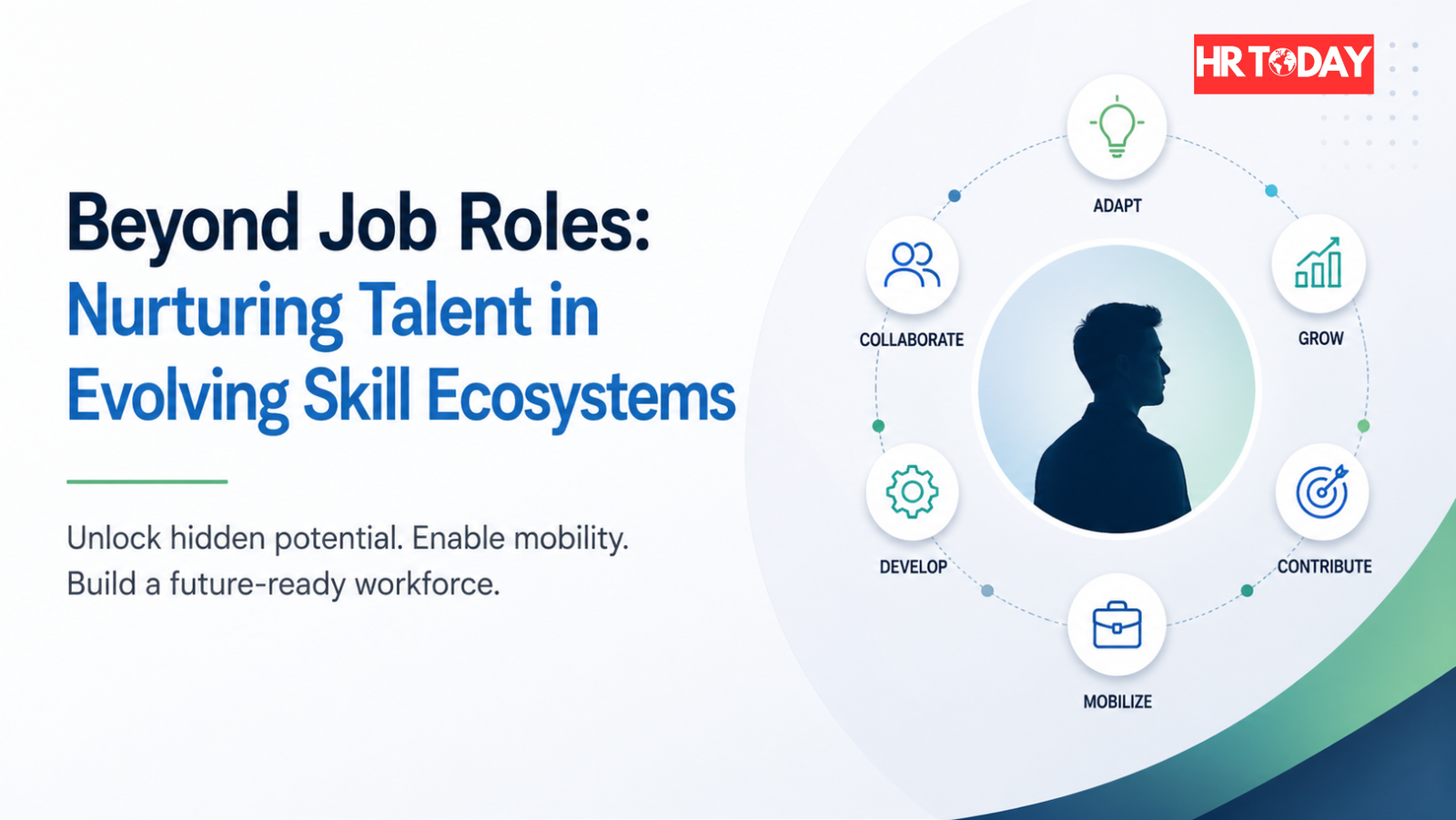
To address these challenges, many organizations are gradually shifting toward skill-based talent ecosystems. Instead of defining employees primarily through the roles they occupy, this approach focuses on the capabilities individuals bring to the organization and how those skills can be deployed across multiple contexts. This shift represents a fundamental transformation in how organizations identify, develop, and utilize talent.
The Limits of Role-Based Talent Systems
Traditional HR systems have long been built around clearly defined job roles and hierarchical structures. Job descriptions outline responsibilities, competencies, and reporting relationships, while performance management systems assess employees based on how effectively they perform within these predefined expectations. Although this structure provides clarity and stability, it can also limit organizational adaptability in rapidly evolving environments.
One major limitation of role-based systems is their static nature. Job descriptions are often reviewed periodically, but the speed of technological and market change means that skill requirements evolve much faster than these frameworks can keep up with. New tools, digital capabilities, and cross-functional competencies frequently emerge before organizations have formally recognized them within existing roles.
Rigid role structures can also prevent organizations from fully utilizing the capabilities of their workforce. Employees often develop skills that extend beyond their formal job responsibilities, yet these abilities remain largely invisible to the organization. As a result, companies may struggle to redeploy talent effectively when new challenges arise or opportunities emerge.
This lack of visibility can create a paradox in which organizations experience talent shortages while simultaneously underutilizing existing capabilities. Companies may invest heavily in external hiring to acquire new skills, even though similar expertise already exists internally. In such cases, the problem is not a lack of talent but rather an inability to identify and mobilize the skills employees already possess.
Additionally, role-based systems can limit collaboration and innovation. When employees are confined strictly to predefined responsibilities, organizations may miss opportunities to leverage diverse perspectives and cross-functional capabilities. Over time, this rigidity can restrict the creative potential of the workforce.
The Rise of Skill-Based Talent Ecosystems
In response to these limitations, organizations are increasingly shifting toward talent systems that place skills at the center of workforce strategy. A skill-based talent ecosystem begins with a simple shift in perspective: instead of asking “What job does this employee hold?”, organizations begin asking “What skills does this employee possess?”
To support this approach, many organizations are building digital talent profiles that map employee capabilities across the enterprise. These profiles capture technical expertise, leadership abilities, behavioral strengths, and emerging digital competencies. By creating greater visibility into workforce skills, organizations gain a clearer understanding of the capabilities available within their teams.
Many companies also develop structured skill frameworks that categorize competencies across different domains. These frameworks help identify organizational strengths, detect capability gaps, and align talent development strategies with future business needs.
Perhaps the greatest advantage of skill-based systems is the flexibility they enable. When organizations understand the capabilities present within their workforce, employees can be deployed more fluidly across projects, teams, and functions. Rather than being restricted by rigid job descriptions, individuals can contribute wherever their skills create the most value.
Internal Talent Mobility as a Strategic Advantage
One of the most significant outcomes of skill-based talent ecosystems is the expansion of internal talent mobility. By making workforce capabilities more visible, organizations can create opportunities for employees to explore roles, projects, and assignments beyond their immediate responsibilities.
Internal talent marketplaces have emerged as an effective tool to support this approach. These platforms allow employees to discover opportunities across different parts of the organization and match assignments with their skills and interests. This creates a more dynamic workforce while enabling organizations to utilize their existing talent more effectively.
A notable example is Unilever, which introduced an AI-powered internal talent marketplace called FLEX Experiences. Through this platform, employees can contribute to short-term projects across different functions, allowing them to develop new capabilities while supporting business priorities.
Such initiatives can significantly enhance employee engagement and retention. Many professionals leave organizations not because they dislike their work but because they see limited opportunities for growth. By providing greater visibility into internal opportunities, skill-based talent systems encourage employees to pursue new challenges without leaving the organization.
AI as an Enabler of Skill-Based Talent Management
Advances in AI have played a critical role in enabling skill-based talent ecosystems. Modern talent platforms allow organizations to collect and analyze data related to employee capabilities across the workforce, providing insights into existing skills and emerging gaps.
Artificial intelligence is increasingly being used to enhance these systems. AI-driven tools can identify skill gaps, recommend personalized learning pathways, and match employees with roles or projects that align with their expertise. These advances allow organizations to move beyond reactive talent management toward more strategic workforce planning.
For example, IBM has adopted a “skills-first” workforce strategy that prioritizes demonstrated capabilities over traditional credentials. By using digital platforms to map workforce skills and guide employee development, the company aims to build a workforce capable of adapting to changing technological and business demands.
AI also supports continuous learning by enabling employees to access training programs tailored to their specific development needs. This helps create a workforce that evolves alongside the organization’s strategic priorities.
Conclusion: Unlocking the Talent Already Within
The shift from role-based talent management to skill-based ecosystems represents a significant transformation in how organizations think about talent. In the past, job titles defined careers and shaped professional identities. Today, however, skills increasingly define opportunities and determine how individuals contribute to organizational success.
Organizations that embrace this transition will be better positioned to navigate uncertainty, drive innovation, and respond to emerging challenges. By recognizing and mobilizing the full range of capabilities within their workforce, they can unlock hidden potential that might otherwise remain invisible.
Ultimately, the future of talent management may depend less on designing perfect job descriptions and more on building systems that continuously discover, develop, and deploy skills. When organizations adopt this perspective, they often discover that the talent they were searching for externally had been present within their workforce all along.
Read Also : The Great Rewiring: What India’s new labour codes really mean for employers
India’s Airline Crisis: When Efficiency Overrides Resilience
Rethinking Talent in the Age of AI: Why Workforce Agility Starts with the 4Bs