

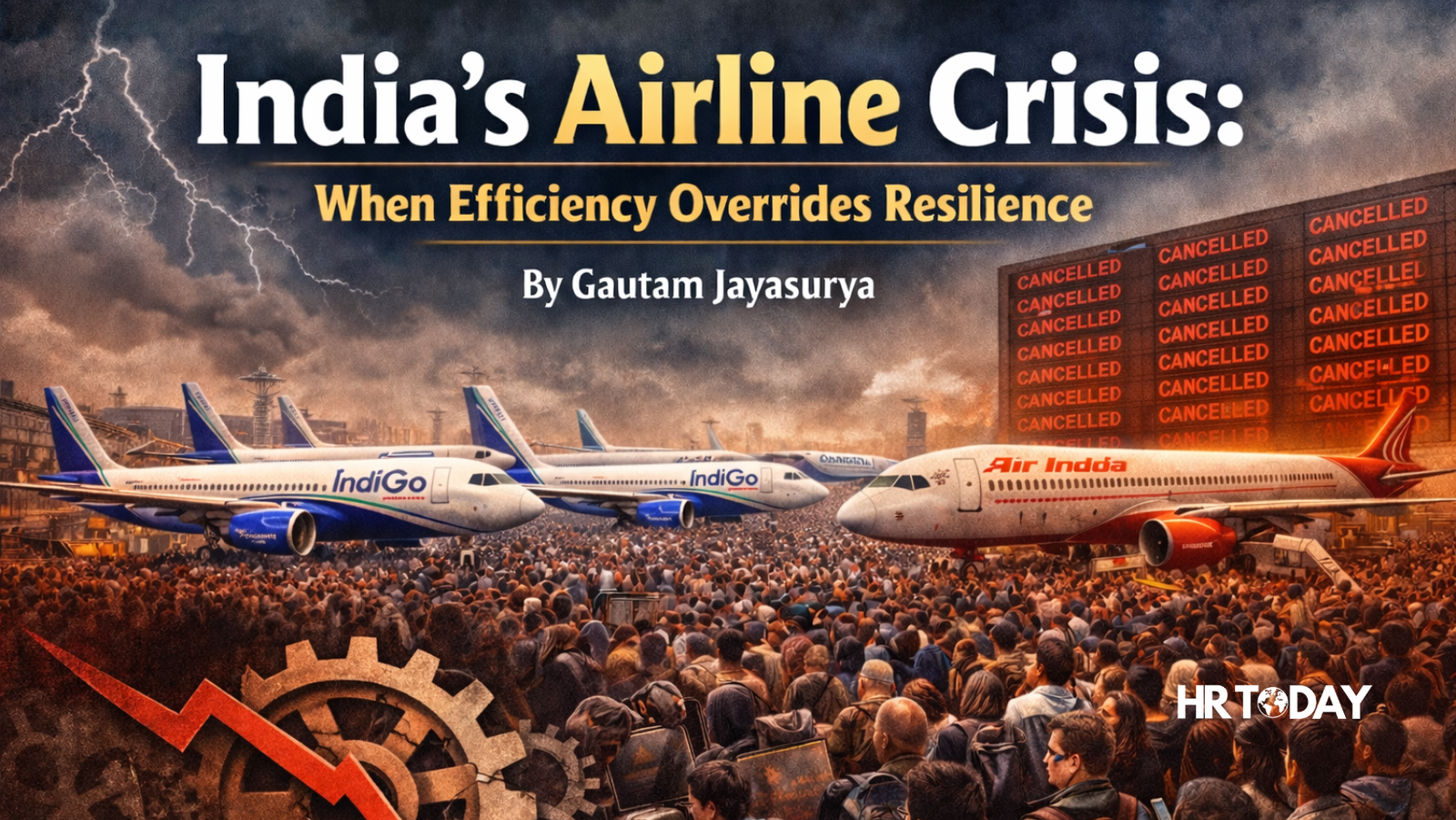
IndiGo Airlines is facing one of the most consequential operational disruptions in Indian aviation history, with over 900 flights cancelled December 2 to 9. While passengers experienced the immediate inconvenience, the deeper implications lie in how India’s largest airline — and the ecosystem around it — approached regulatory preparedness, workforce strategy and fatigue management in a safety-critical industry.
This episode is not merely about schedules collapsing. It is about what happens when human resources are treated as an efficiency lever rather than a safety system.
A Regulatory Shift Years in the Making
The 2025 Flight Duty Time Limitations (FDTL), mandated by the DGCA, were neither sudden nor unexpected. They were the result of extensive international research establishing a direct correlation between pilot fatigue and aviation incidents. In India, their implementation was delayed multiple times after resistance from airlines, eventually compelling pilot associations to approach the courts. A final affidavit by the DGCA committed to implementation by November 1, giving airlines nearly two years to prepare.
The urgency was reinforced by lived reality. The industry had already witnessed sudden deaths of young pilots, both on and off duty, raising uncomfortable questions about cumulative fatigue, inadequate recovery and systemic stress. The revised norms — increasing weekly rest from 36 to 48 hours and limiting night landings from six to two — were designed not as a concession to labour, but as a correction to a safety gap.
Given IndiGo’s reputation for meticulous planning and long-term capacity forecasting, it is difficult to accept the present disruption as a simple failure of anticipation. The airline had sufficient notice to recalibrate rosters, crew buffers, hiring pipelines and fatigue-risk management systems.
From Market Dominance to Structural Fragility
IndiGo’s success story is undeniable. Its minimalist service model never promised comfort, but it delivered frequency, punctuality and affordability at scale. For millions of Indians, it became the aviation equivalent of the auto-rickshaw — ubiquitous, predictable and value-driven. This clarity of customer proposition helped the airline secure close to 60 percent market share and post profits exceeding ₹8,000 crore last year.
However, efficiency achieved through extreme utilisation comes with a hidden trade-off. When systems are designed to operate with minimal slack, regulatory tightening — even when predictable — becomes destabilising. What appears as operational excellence during stable periods reveals itself as fragility under constraint.
Within pilot circles, it is widely believed that the disruption was not entirely accidental but an attempt to apply pressure on the regulator to dilute the FDTL norms. Whether or not this interpretation is accurate, the more important lesson is structural: when compliance is treated as negotiable and resilience as expendable, the system’s margin for error disappears.
Ignoring Hygiene Factors in a Safety-Critical Business
In organisational theory, hygiene factors are foundational conditions that do not create competitive advantage but whose absence creates serious dissatisfaction and risk. In aviation, regulatory compliance, fatigue management and lawful rostering are not strategic differentiators — they are non-negotiable prerequisites for safe operations.
The attempt to manage FDTL through workarounds rather than structural redesign suggests a deeper mindset problem. Practices such as reclassifying duty patterns, narrowly interpreting rest definitions, or excluding commute and waiting time from meaningful fatigue assessment treat pilots as schedulable assets rather than human systems with physiological limits.
In most industries, such shortcuts lead to disengagement. In aviation, they can lead to catastrophe. When safety regulations are viewed as obstacles to be navigated rather than boundaries to be respected, risk is not eliminated — it is merely deferred.

The Hidden Cultural Cost of Fatigue
Pilots do not operate on weekends or fixed calendars. Their rest days are scattered across the week and genuine recovery depends on predictability, family time and cumulative rest. In practice, pilots report that most forms of leave — including sick leave taken close to weekly rest, casual leave and annual vacation — are counted as rest days, reducing actual protected downtime.
Fatigue reporting offers limited protection. Reports are often evaluated by airline-appointed panels that reject them on the basis that rest was available earlier in the roster or will be available later, ignoring the concept of cumulative fatigue or day-of-operation exhaustion. The science of fatigue is replaced by spreadsheet logic.
Unlike most professions, fatigue in aviation has non-linear consequences. A tired driver or doctor may harm a few. A fatigued pilot risks hundreds of lives at once. Yet pilots are often compensated only for airborne time, not for hours spent waiting, preparing, or recovering from disruptions — a disconnect that reinforces the sense of being treated as a cost unit rather than a safety asset.
Rostering practices further intensify stress. Schedules can reportedly be altered with short notice, disrupting rest planning and personal commitments. Pilots who raise concerns are asked to justify themselves, reinforcing a culture of compliance rather than safety. Over time, this suppresses reporting, normalises exhaustion and pushes risk underground. Fatigue, in such environments, is no longer an individual condition. It becomes an organisational outcome.
A Workforce Strategy Misaligned With Risk
IndiGo has historically followed a lean workforce strategy, which worked when safety norms were looser and demand growth was predictable. However, lean staffing in high-risk industries requires strict preconditions. It cannot compromise safety, must be supported by proportionate compensation for intensity and must allow for balance when pay is not market-leading.
What appears to have emerged instead is a combination of high utilisation, constrained rest, reduced leave and compensation that does not fully account for the physiological cost of work. This creates a fragile equilibrium, sustained only as long as employees feel trapped rather than committed.
Organisations typically make one of two trade-offs. They either pay a premium for intensity, accepting higher attrition but easier hiring, or they offer balance and predictability, accepting lower margins but greater retention. IndiGo appears to have attempted neither consistently. The result is cultural ambiguity — unclear employer value proposition, rising dissatisfaction and accelerating exits.
Southwest Airlines learned decades ago that employee satisfaction directly enhances operational capability. IndiGo’s experience suggests the cost of ignoring that lesson.
When Talent Becomes Dispensable, Knowledge Walks Out
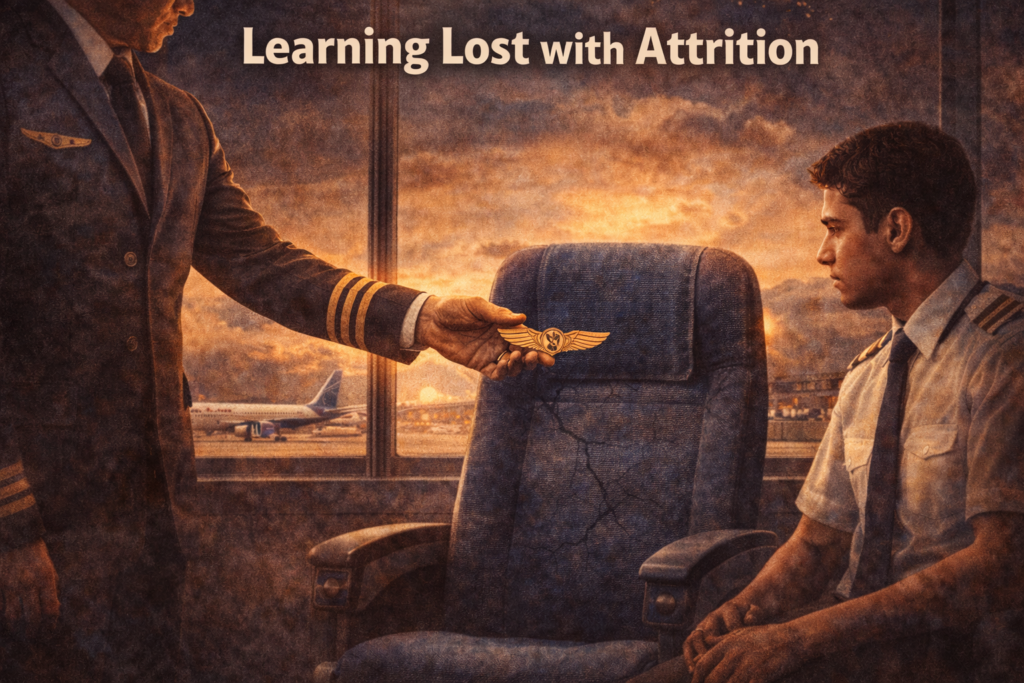
Aviation expertise is not captured in licenses alone. It resides in experience — in handling weather anomalies, system failures, crew coordination and high-pressure decision-making. When experienced pilots leave, organisations lose not just headcount but institutional memory and mentoring capacity.
Replacing this knowledge through formal training is expensive and slow. In an industry where training pathways span years, attrition triggered by fatigue and cultural stress becomes a long-term operational liability, not a short-term HR issue.
Workforce Planning as a Strategic Failure
The most striking failure is not compliance but planning. Despite two years’ notice, IndiGo appears not to have deployed advanced workforce planning models capable of simulating revised duty limits, attrition scenarios and hiring constraints. Such models are standard in global aviation and increasingly incorporate principles of sleep physiology, circadian science and predictive analytics.
Strategic workforce planning is not optional in capital-intensive, regulated industries. It is the mechanism that converts regulation into resilience. The absence of visible buffers suggests that HR was positioned as an administrative function rather than a strategic partner in risk management.
Exit Barriers and Retention by Constraint
Retention, when driven by barriers rather than commitment, is a fragile strategy. Extended notice periods, financial bonds, delayed documentation and limited mobility may slow exits, but they do not create engagement. Instead, they create a workforce that remains physically present but psychologically withdrawn. Such systems may deliver short-term continuity but erode long-term safety culture. In aviation, disengagement is not a soft issue; it is a risk amplifier.
Choosing Resilience Over Optimisation
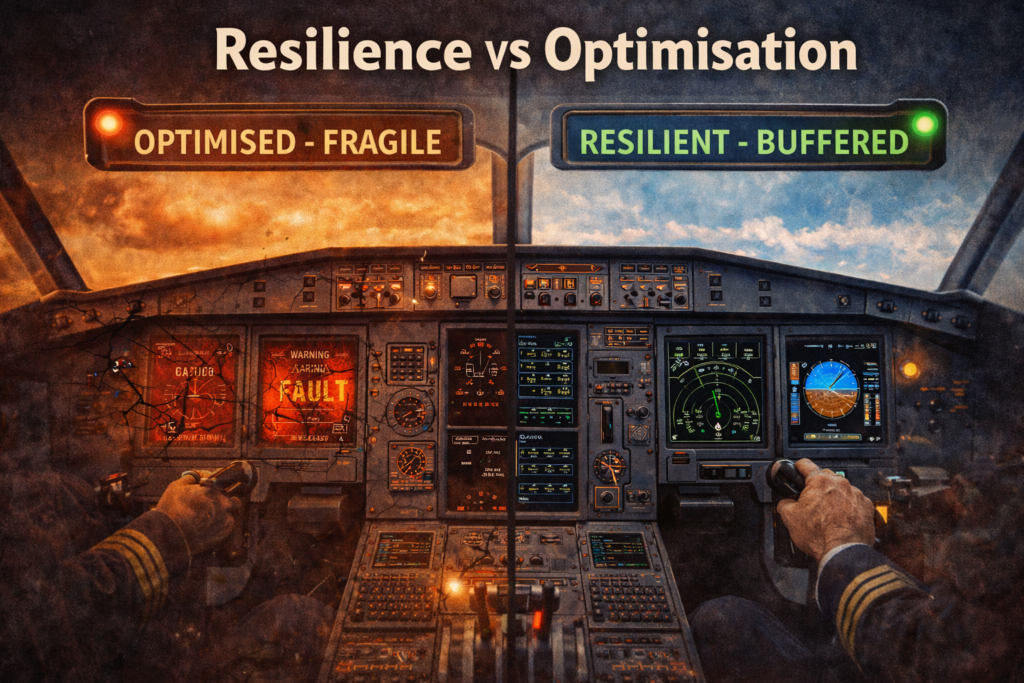
IndiGo remains a vital pillar of India’s aviation ecosystem. Its contribution to connectivity and affordability is significant. But the current crisis underscores a broader lesson for all regulated industries: efficiency without resilience is not excellence; it is deferred risk.
Stabilisation will require more than schedule adjustments. It demands a fundamental reset in how human resources are valued — as a strategic capability, not a variable cost. Restoring trust will require predictable rosters, credible fatigue reporting, industry-standard leave and workforce planning that respects human limits.
Aviation safety is inseparable from workforce safety. When fatigue becomes systemic, it ceases to be an HR problem and becomes a governance failure.
Efficiency builds scale. Resilience sustains trust. In aviation, trust is what keeps passengers alive.
Read Also : Building High-Performance Offshore Teams in 90 Days: Best Practices to Align Culture, Compliance and Connection
People First: How Employee-Centric Strategies Fuel Organizational Success
The Role of Leadership in Building Organisations
Gender, Diversity, and Inclusive Leadership: Embedding Inclusion into the Organizational DNA Beyond Compliance