

Burnout has become one of the most widely discussed challenges in today’s workplace—and one of the most misunderstood.
In many organizations, the response focuses on the individual. Burnout is often framed as a personal issue—something employees need to solve by managing their time, setting boundaries, or building resilience. As a result, companies invest in productivity tools, time management training, and wellness initiatives. While these strategies can be helpful, they place the responsibility on the individual without addressing the conditions creating the strain.
Burnout is not just about how people manage their time and their stress. It’s about whether they have the capacity to do their work effectively in the first place. And more importantly, it is shaped by how leadership either supports that capacity or steadily erodes it.
Burnout Is a Capacity Issue
At its core, burnout happens when the demands placed on someone consistently exceed their capacity to meet them. But capacity is not just about hours in the day. It includes focus, energy, clarity, emotional bandwidth, and the ability to think and make decisions effectively.
Someone can have a well-structured schedule and still feel completely overwhelmed. I see this often with leaders and their teams. They are not just busy—they are mentally overloaded, navigating constant interruptions, unclear priorities, and a steady stream of decisions without the space to process them. Over time, that kind of environment wears people down.
One of the most important things I have learned is that burnout is often less about the individual and more about ineffective leadership practices.
The Leadership Gap
Most leaders today were never trained in what it takes to successfully lead in today’s environment. Work has evolved significantly over the past few decades. Not long ago, leadership was more transactional and reactive, and what was valued at work was tenure, loyalty, and sacrifice. Managers focused primarily on setting direction, making decisions, solving problems, and addressing issues as they arose.
Today, leadership is far more complex. Employees are looking for more than direction—they want growth, development, meaningful work, and a sense of connection to what they do.
Managing today’s workforce requires a higher level of leadership capability than ever before. The role of the leader has expanded to include coaching, developing others, providing regular feedback, recognizing contributions, and creating an environment where people can perform at their best.
At the same time, the pace of change has accelerated, expectations have increased, and managing people has become more nuanced. Many organizations are now leading across five generations, each with different expectations and communication styles. The shift to remote and hybrid work has added another layer, requiring leaders to be more intentional in how they communicate, stay connected, and build alignment without the benefit of constant in-person interaction.
This environment requires far more than simply fixing problems or telling people what to do. It demands an active and intentional approach to leadership—one that creates clarity, engages employees, and guides performance proactively rather than reacting to issues as they arise.
The Fixer Trap
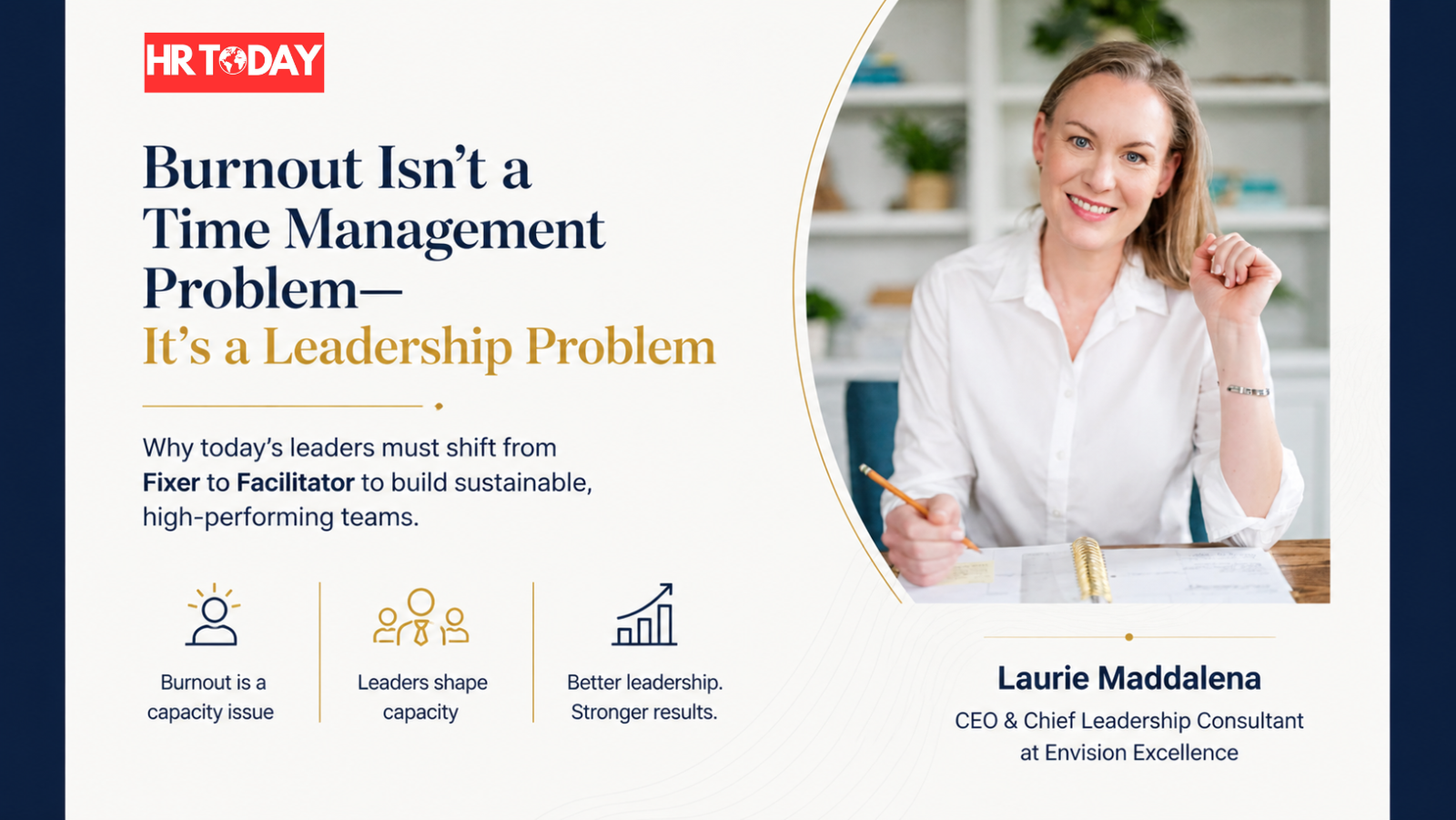
In short, today’s leaders need to be facilitators, not fixers.
Most leaders have been conditioned to solve problems and step in when something goes wrong. They have learned to be responsive, involved, and helpful. On the surface, these behaviors seem positive, but over time, they create a pattern that becomes unsustainable for both the leader and the team.
Leaders find themselves in the trenches of the day-to-day work—answering questions, resolving issues, and stepping in whenever something is off track. Many leaders rely more on their technical skills than leadership skills because they have not been trained in a more modern approach. In many organizations, managers are promoted for technical proficiency, which often leaves them underprepared for leadership.
They haven’t been taught how to delegate effectively, create clarity, or facilitate performance through others. This becomes even more challenging and what I refer to as the “messy middle” of leadership—where managers are balancing expectations from above while supporting the needs of their team below. They are translating direction, managing competing priorities, and
trying to stay responsive on all sides. Without the right skills and frameworks, this layer of leadership is where overwhelm builds quickly. And even seasoned leaders often struggle because their leadership approach hasn’t evolved with the changing demands of today’s workplace.
So, they default to what feels productive in the moment—fixing.
What begins as support gradually turns into dependence. The team relies more heavily on the leader, and the leader becomes responsible for more than they can realistically carry. Their time is consumed by execution instead of the leadership work that facilitates clarity, development, and results.
This is where capacity begins to break down.
How Burnout Spreads
Leaders become overwhelmed because they are operating in a way that is not sustainable. At the same time, employees are not getting the clarity, support, or development they need to take ownership, which leads to frustration and disengagement. This is often compounded by a lack of alignment across teams. When priorities and strategic goals are not clearly aligned, work becomes disconnected—resulting in rework, miscommunication, inefficiencies, and added pressure that further drains capacity across the organization.
Another common breakdown I see is in how organizations translate strategy into execution. Strategic goals are set, but there isn’t a clear system in place to scope projects, prioritize effectively, and allocate resources appropriately. As a result, teams are asked to take on more than their capacity allows. Projects stack up, timelines extend, and work becomes increasingly reactive, creating a volume of work that feels constant and unmanageable and adding another layer of overwhelm.
As leaders become more overwhelmed, their ability to create clarity declines. Priorities shift or remain unclear, expectations are not consistently communicated, and employees are left to interpret what matters most. This leads to unnecessary urgency, continued misalignment, and a persistent sense of being behind.
Many leaders also avoid difficult conversations because they haven’t been equipped with the skills to handle them effectively. In some cases, they are trying to preserve harmony on the team—but in doing so, they create the opposite effect. When issues are not addressed early, they grow. Underperformance remains unresolved, and high performers begin to feel the
imbalance as they take on more work or compensate for gaps. Over time, this leads to frustration, decreased engagement, and added pressure on those already carrying the most.
When this pattern continues, burnout spreads.
Leaders feel overwhelmed, which makes it harder to lead effectively. Employees experience confusion, misaligned workloads, and a lack of support. Over time, burnout builds across the team, placing even more pressure back on the leader.
It becomes a cycle.
Not Everyone is Meant to Be a Leader
And while these patterns often show up in day-to-day leadership behaviors, they are also reinforced by how organizations select and develop their leaders. There is a reality that organizations do not always address directly: not everyone is suited for a leadership role. Many individuals are promoted based on performance in their previous roles, but leadership requires a different set of skills—coaching, emotional intelligence, managing conflict, and the ability to navigate change. These capabilities are not always developed before someone steps into leadership.
When leaders are placed into roles without the right preparation or support, both they and their teams feel the impact. The leader experiences increased pressure, uncertainty, and self-doubt, while the team experiences inconsistency, lack of direction, and gaps in support.
At the same time, many organizations continue to operate with a “do more with less” mindset. Work is added, and expectations remain high, but there is little evaluation of whether the available capacity can realistically support those demands.
When capacity is not part of the conversation, burnout becomes a predictable outcome.
Rethinking Performance and Leadership
Addressing burnout requires a shift in how organizations think about performance. Many still reward responsiveness, availability, and volume of output, but these are not indicators of sustainable performance. Someone can be highly responsive and be operating at the edge of exhaustion.
Sustainable performance requires clarity, focus, and the ability to think critically. It depends on whether individuals have the capacity to do their work well, not just quickly.
From a leadership perspective, this means asking different questions. Instead of focusing only on output, leaders need to consider what their teams need to perform effectively. That includes clarity, managing priorities with intention, addressing issues early, and developing employees so that ownership is shared rather than concentrated.
It also requires organizations to invest in leadership development in a more intentional way, and to not view development as an expense, but as an investment in the culture and in the
well-being of employees. The direct manager has the greatest impact on the employee experience and ultimately shapes the culture of the team and organization. When leaders are equipped with the skills to lead effectively, the ripple effects are significant—not just in performance, but in engagement, retention, and overall workplace experience.
Burnout Is Reduced Through Better Leadership Practices
This is where leadership shifts from awareness to action.
Burnout is reduced not through broad initiatives alone, but through the everyday practices of leadership—how managers and executives show up, communicate, and manage their teams on a daily basis. In my experience, a few consistent shifts will make a meaningful difference. These practices are most effective when paired with an organizational commitment to properly developing leaders and establishing clear project management systems that align work with realistic capacity.
- Move from doing to leading
Leaders need to be intentional about where they spend their time. Many are still operating in execution mode—solving problems, answering questions, and stepping in—rather than developing their team to take ownership. Leaders should get clear on the key result areas that create the biggest impact in their role, which include proactively creating clarity, caretaking the culture, and facilitating results.
- Build ownership through coaching
Instead of providing immediate answers, effective leaders lean into curiosity. Asking questions like “What do you think the best approach is?” or “What would you recommend?” helps employees think more critically and take ownership. Over time, this reduces dependency and alleviates the pressure on the leader to have all the answers.
- Make clarity and alignment a leadership habit
Clarity needs to be reinforced consistently through how leaders communicate, set priorities, and follow up—not addressed only when issues arise. This includes clearly communicating priorities, aligning expectations within and across teams, and regularly recalibrating as work evolves. When clarity and alignment are present, teams move more efficiently and with greater focus.
- Protect time for leadership work
Leadership requires time for thinking, planning, and developing others, yet many leaders operate in a constant state of interruption. Protecting time for strategic focus and team development is essential. Without it, leaders default to reacting rather than leading.
These shifts are not complex, but they are foundational. When practiced consistently—and supported by strong leadership development and clear operational systems—they begin to change not only how leaders operate, but how their teams experience work.
A More Sustainable Path Forward
Burnout is not simply the result of too much work; it’s the result of how work is structured, how leadership is practiced, and whether organizations are operating with a realistic understanding of capacity. When leaders are unprepared for the complexity of today’s environment, pulled into execution instead of leading, and operating without the tools to create clarity, alignment, and accountability, the impact ripples across their teams. Add in misaligned priorities, lack of structure around execution, and a “do more with less” mindset, and burnout becomes inevitable. Addressing it requires more than individual strategies; it requires better leadership. When organizations invest in developing leaders, create systems that align work with capacity, and support leaders in shifting from fixing to facilitating, they don’t just reduce burnout—they create stronger teams, healthier cultures, and exceptional results.
Read Also : Beyond Job Roles: Nurturing Talent in Evolving Skill Ecosystems
IWork in the Age of AI: Are Indian Organisations Redesigning Jobs – or Simply Automating Them?
Rethinking Talent in the Age of AI: Why Workforce Agility Starts with the 4Bs
The Rise of the Chief Human Agency Officer: Why Every AI Organization Will Soon Need One