

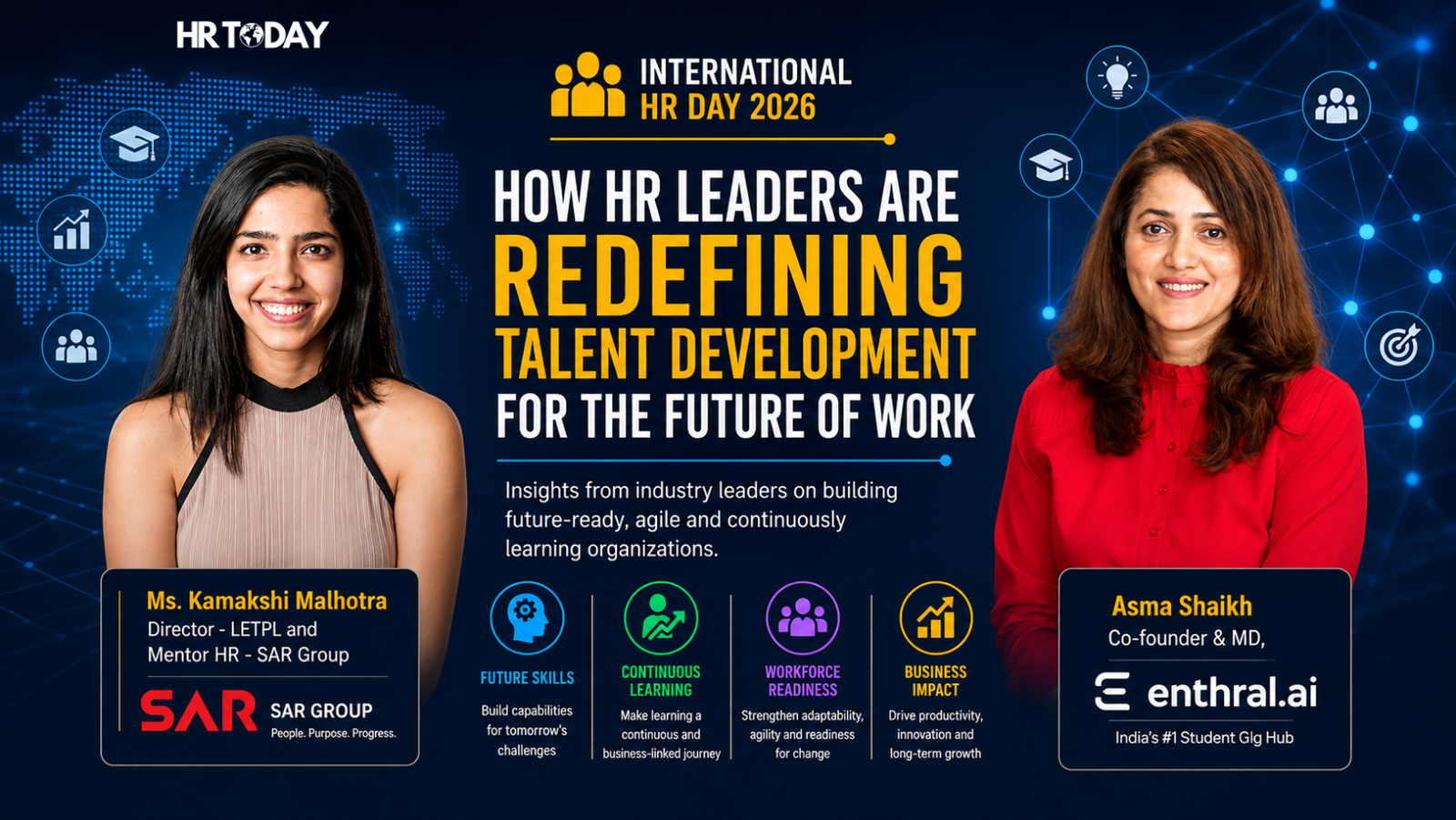
The future of work is being shaped in real time. AI is no longer an emerging trend, automation, hybrid work has become mainstream, business models are evolving faster than ever, and the skills continue to shrink. With AI and automation accelerating innovation, hybrid work becoming mainstream, changing employee expectations, and business models evolving faster than ever, HR leaders are rethinking how organisations build, retain, and grow talent. At the same time, the shelf life of skills continues to shrink, making continuous learning, adaptability, and workforce readiness more important than ever before.
Talent development has moved beyond annual training calendars. It is now becoming a continuous, business-linked process focused on future skills, adaptability and long-term workforce readiness. According to the World Economic Forum’s Future of Jobs Report 2025, nearly 39% of workers’ existing skill sets are expected to be transformed or become outdated between 2025 and 2030, making reskilling and upskilling a critical priority for organisations.
According to LinkedIn’s Workplace Learning Report, opportunities to learn and grow have also become one of the top factors influencing employee retention and workplace engagement globally, further reinforcing why organisations are investing more heavily in continuous learning and workforce development.
Today, HR leaders are moving towards skill-based talent models, where employees are assessed not only by their designations or years of experience, but by the capabilities they bring and the skills they can build. This is helping organisations improve internal mobility, identify future leaders and prepare teams for roles that may not fully exist yet.
AI is also changing the way talent development is delivered. From personalised learning journeys and skill-gap mapping to productivity tools and digital learning platforms, technology is helping HR teams make learning more relevant and measurable. At the same time, human skills such as communication, empathy, problem-solving, creativity and leadership are becoming even more important.
Another key shift is the rise of industry-aligned learning. Organisations are looking for training that is practical, role-specific and connected to real business outcomes. This is especially important in sectors such as manufacturing, energy, education, EVs, healthcare, retail and technology, where job roles are evolving quickly. Today, employees are looking beyond compensation and career paths. They want organizations to invest in their growth, offer opportunities to build future-ready skills, and an environment where learning is continuous.
For HR leaders, the focus is now clear: build a workforce that is agile, digitally fluent and ready for continuous change. Talent development is no longer just an employee benefit. It is a retention tool, a productivity driver and a core business strategy.
Ms. Kamakshi Malhotra, Director – LETPL and Mentor HR – SAR Group

“Technology is transforming every industry at an unprecedented pace, but the true differentiator for organisations will always be their people. In sectors like energy, manufacturing, and emerging mobility, where innovation cycles are accelerating rapidly, the workforce must continuously evolve alongside the business. This is why talent development today cannot be treated as a periodic HR initiative; it has become a strategic business imperative.The organisations that will lead the future are the ones investing early in continuous learning, digital capability building, and leadership development before skill gaps begin to impact growth. HR leaders now play a critical role in shaping agile, resilient, and future-ready workforces that can adapt, innovate, and drive long-term value creation.
At Livguard, we believe that just as India’s energy needs are evolving, the workforce must evolve alongside them. Building future-ready organisations today requires not only smarter technologies and innovative energy solutions, but also people who are ready to learn, adapt and grow with change. Whether it is powering homes, enabling businesses or supporting India’s transition towards smarter and sustainable energy ecosystems, long-term progress will always be driven by the passion and capabilities of the people behind it.”
Asma Shaikh, Co-founder & MD, Enthral.ai
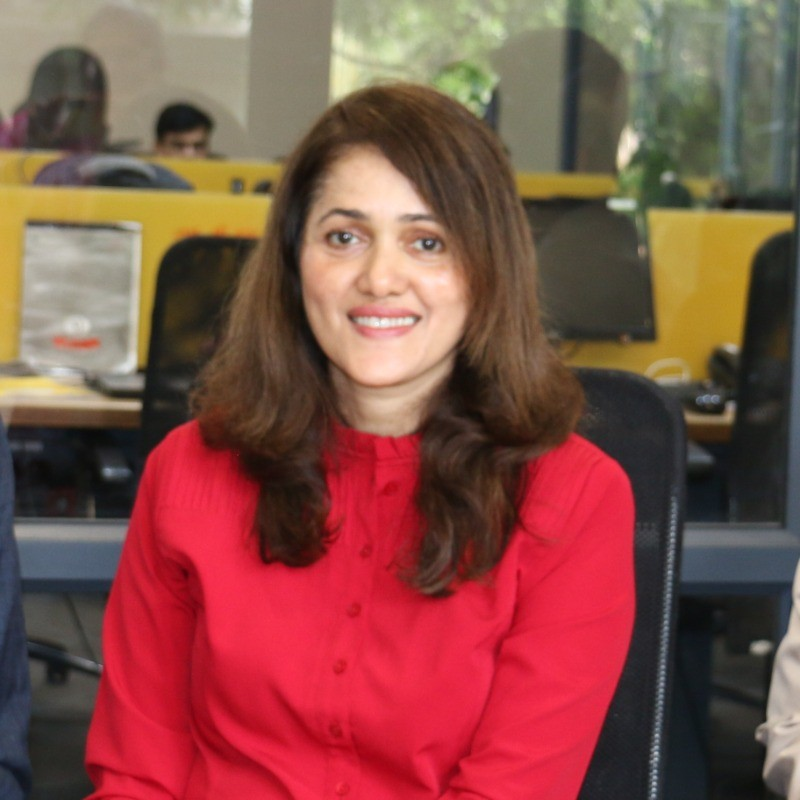
“Technology is redefining every aspect of how businesses operate, but the real competitive advantage will come from how effectively organizations develop their people. As industries evolve faster than ever, traditional training models are no longer enough. Enterprises today need workforces that can continuously learn, adapt quickly, and become role-ready in real business environments.
HR leaders are therefore moving beyond learning as a compliance activity and treating skilling as a core business strategy linked directly to productivity, innovation, and long-term growth. The focus is shifting toward creating learning ecosystems that are personalized, measurable, and deeply connected to real-world performance outcomes. At Enthral.ai, we believe the future of workforce transformation lies in immersive, AI-powered learning experiences that enable employees to build skills through practice, feedback, and continuous improvement. Through AI Avatars, 2-way video simulations, and Agentic AI coaching, learners can engage in realistic workplace scenarios, strengthen decision-making capabilities, and gain the confidence required to perform effectively from day one. The organizations that will lead tomorrow are the ones investing in workforce readiness today, not just by training employees, but by building adaptable, future-ready talent capable of driving innovation and business resilience at scale.”
In the future of work, the strongest organisations will be the ones that invest in people before skill gaps start affecting business growth. HR leaders today are not just managing talent anymore; they are helping shape the future workforce by building teams that can learn, adapt, and grow with changing business needs. As the future of work continues to evolve, organisations that prioritise learning, adaptability, and workforce readiness today will be better equipped to navigate disruption and unlock long-term growth tomorrow. The next era of business leadership will belong to organisations that invest in people as intentionally as they invest in innovation.
The deeper shift underway is not just structural, but philosophical. Work is no longer a static destination defined by roles and job descriptions; it is becoming a continuous state of evolution. In this changing world, talent development is not about preparing people for predefined careers, but equipping them for unpredictable ones and for upskilling. The idea of a fixed career path is slowly going away, and instead people are moving toward a more flexible journey based on skills where learning, unlearning, and relearning keep happening throughout their careers.
HR leaders, therefore, are not just designing systems of training, but systems of possibility where people are not limited by current roles, but enabled by future potential. Perhaps the biggest transformation of all is that organisations are beginning to realise their true strength does not lie in what they already know, but in how quickly they can build what they do not yet know.
Read Also : When Technology, Business, and HR Converge: Why Embedding Ethical AI at Scale Matters
Burnout Isn’t a Time Management Problem—It’s a Leadership Problem
Learning, Education and Pedagogy in the age of AI : Developing Human Capital for the coming Decades
Rethinking Talent in the Age of AI: Why Workforce Agility Starts with the 4Bs
The Rise of the Chief Human Agency Officer: Why Every AI Organization Will Soon Need One