


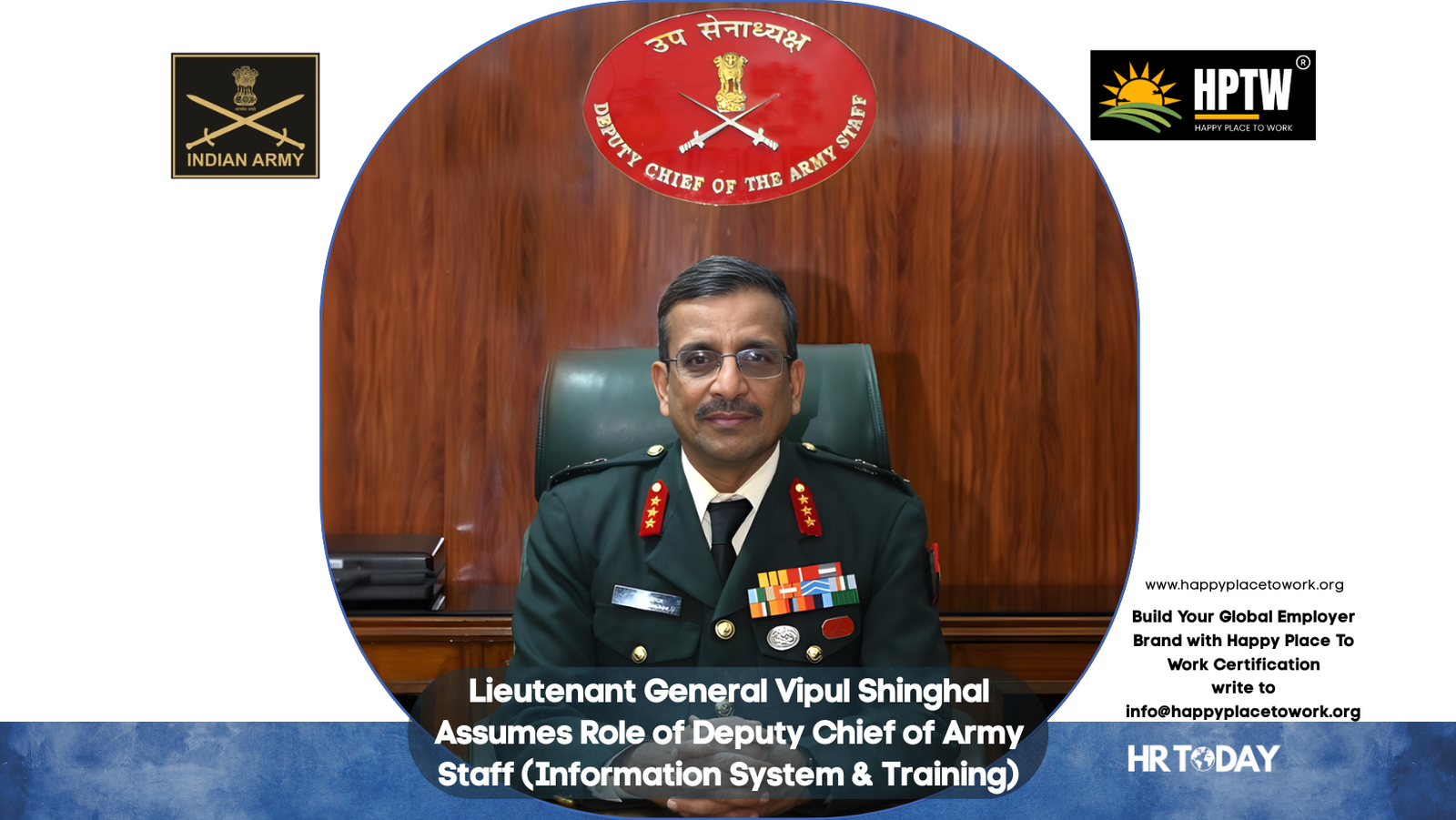
New Delhi, Delhi, India, December 2025 – Lieutenant General Vipul Shinghal has assumed the prestigious appointment of Deputy Chief of Army Staff (Information System & Training) on 01 December 2025, after relinquishing his previous role as Deputy Chief of Integrated Defence Staff (Doctrine, Organisation & Training) at HQ IDS. A distinguished military leader with over 37 years of service in the Indian Army, he brings with him extensive expertise in joint operations, doctrine formulation, training transformation, armoured warfare, logistics, strategic planning, and higher-defence management.
In his most recent assignment, Lieutenant General Vipul Shinghal served as Deputy Chief of Integrated Defence Staff (Doctrine, Organisation & Training), where he played a pivotal role in driving the Armed Forces’ ongoing initiatives on Jointness, Integration, and Transformation. His responsibilities included oversight of joint training frameworks, doctrine development, and the harmonisation of operational processes across India’s tri-services structure.
Before this, he served as Corps Commander of a Strike Corps, commanding approximately 50,000 personnel and overseeing the operational readiness of more than 1000 military platforms and advanced equipment. In this critical appointment, he ensured high-level preparedness and execution capability in one of the Army’s most formidable offensive formations.
Earlier, as a Major General, he commanded an elite Armoured Division in the western sector, contributing to India’s armoured warfare preparedness. As a Brigadier, he served in several strategic roles — including Secretary, National Defence College, where he administered and conducted India’s premier strategic-level professional military course; Chief Operations Officer of a Strike Corps; and Commander of an independent Armoured Brigade in the desert sector.
In previous years, Lieutenant General Shinghal held multiple key appointments as Colonel, including Director, Perspective Planning, Chief Logistics Officer for a large formation along the Line of Control, Commanding Officer of a unit in the western sector, and Battalion Commander at the Indian Military Academy, responsible for shaping the leadership of nearly 500 cadets. These roles, combined with comprehensive early-career command, staff, instructional, and operational tenures, reflect a career marked by enduring service, battlefield leadership, and strategic stewardship.
About Indian Army
The Indian Army is the land-based branch of the Indian Armed Forces and is responsible for ensuring national security, territorial integrity, and operational preparedness against external threats. It also plays a vital role in maintaining internal security, conducting counter-insurgency operations, and leading humanitarian assistance and disaster-relief efforts during natural calamities. Operating under the Ministry of Defence, the Indian Army has a legacy dating back to 1947, inheriting the traditions and regimental structure of the British Indian Army.
The President of India serves as the Commander-in-Chief, while the Chief of Army Staff (COAS) leads the Army as its highest-ranking military officer. Known globally for discipline, professionalism, and combat excellence, the Indian Army remains one of the world’s most capable and respected military forces.
Read Also : When HR “Produces Nothing”: A Response to Jennifer Sey’s Anti-HR Vision
The Fine Balance: Navigating Work, Life, and Mental Wellbeing
Mind the Leadership Gap – From Learning to Real-World Impact
How the Adecco Group is empowering its employees for the future of work