

A 2025 report by Ashoka University indicated that 73% of Indian women exit their jobs after childbirth. Even more telling, approximately 48% of those who return to work drop out within just four months of reintegration. These numbers are not merely statistics; they reflect a structural failure. In many Indian households, childcare is still viewed primarily as the mother’s responsibility, a sentiment echoed by an Axis Bank–Ipsos study of 11,000 urban women, which found that roughly 78% of people in Tier-2 cities and 63% in metros hold this view.
Despite these cultural headwinds, there is a counter-current of progress. According to latest reports, India’s female labor force participation (LFPR) reached 35.3% in December 2025, a significant climb from previous years. However, if we are to sustain this climb, we must address why the “return-to-work” phase remains so fragile.
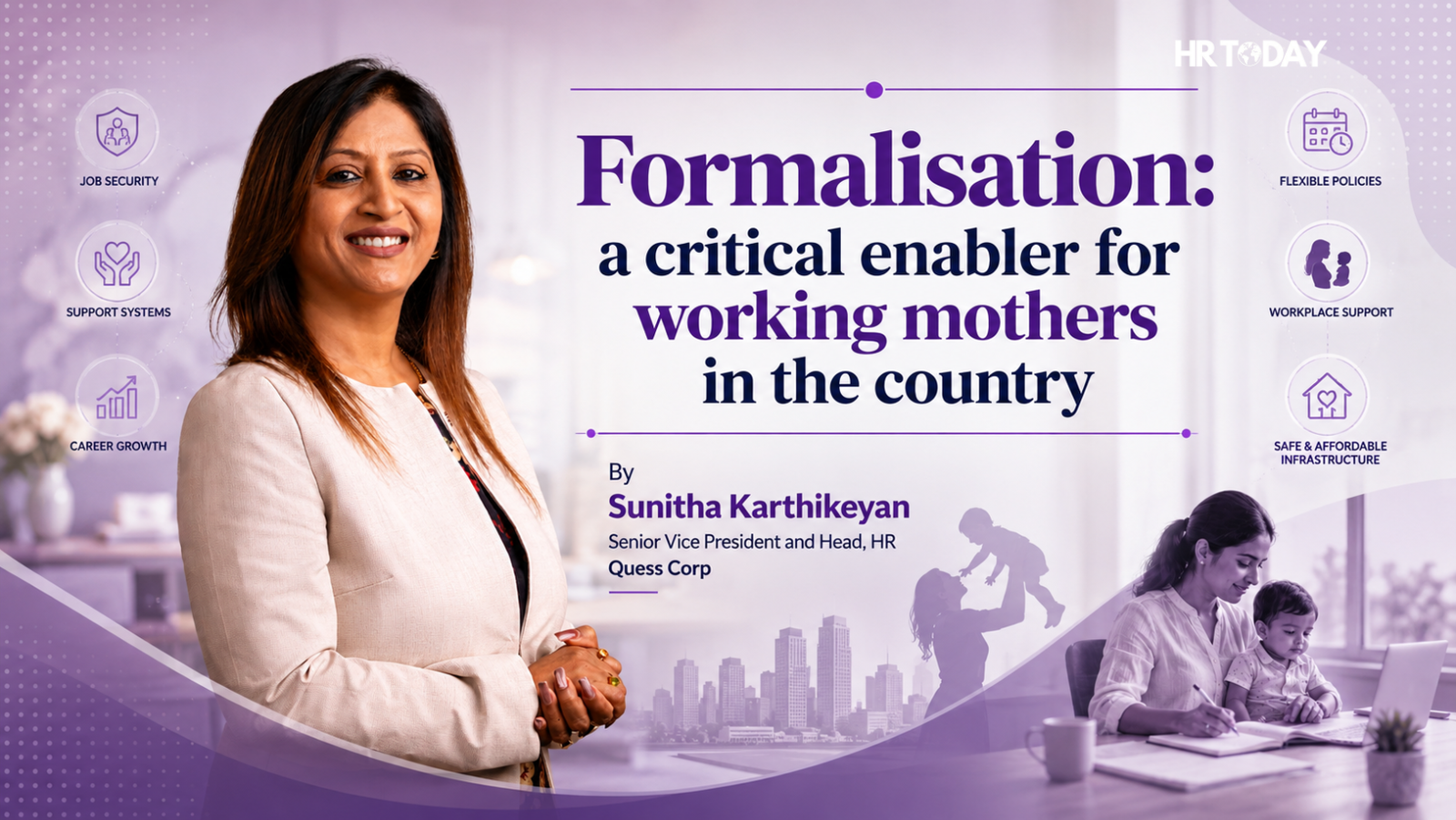
For many working mothers, especially those returning after childbirth, work becomes a daily series of negotiations, over wages, schedules, and job security. While the Code on Social Security (2020), which became fully effective in November 2025, reinforced maternity benefits as a fundamental right, the industry is now seeing a shift toward more active, infrastructure-led support.
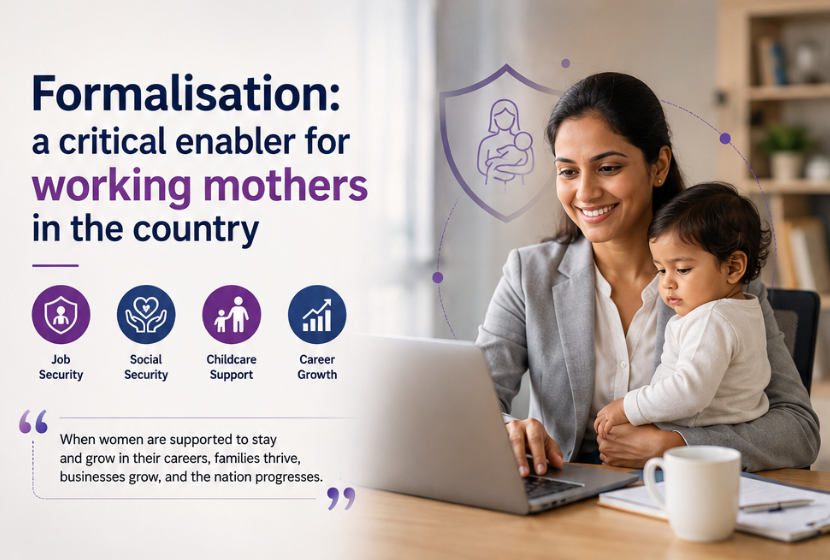
Initiatives like the Palna Scheme (under Mission Shakti) are a prime example of this evolution. By targeting the establishment of 17,000 Anganwadi-cum-Crèches by the end of 2025, the government is moving childcare from the “private domestic sphere” into a formalized support system. Similarly, the expansion of the Sakhi Niwas (Working Women’s Hostel) scheme, with over ₹4,800 crore recently allocated for construction across 28 states, addresses a critical urban barrier: safe, affordable housing with integrated day care for mothers in the workforce.
Furthermore, a landmark Supreme Court ruling in March 2026 has expanded the rights of adoptive and commissioning mothers, ensuring that the legal definition of “motherhood” in the workplace is as inclusive as the modern family itself. While these policy shifts are historic, their impact on a mother’s daily life depends entirely on the nature of her employment. We often discuss formalisation through the lens of compliance: PF, ESI, and paperwork. But for a working mother, formalisation is a critical cognitive tool; it reduces the “decision fatigue” involved in staying employed.
Market trends highlight that this transition is moving deeper into the heart of the country, with 61% of female workforce deployments now occurring outside Tier-1 cities. By bringing formal, protected roles to Tier-2 and Tier-3 hubs, the industry is dissolving the historical barriers of distance and safety.
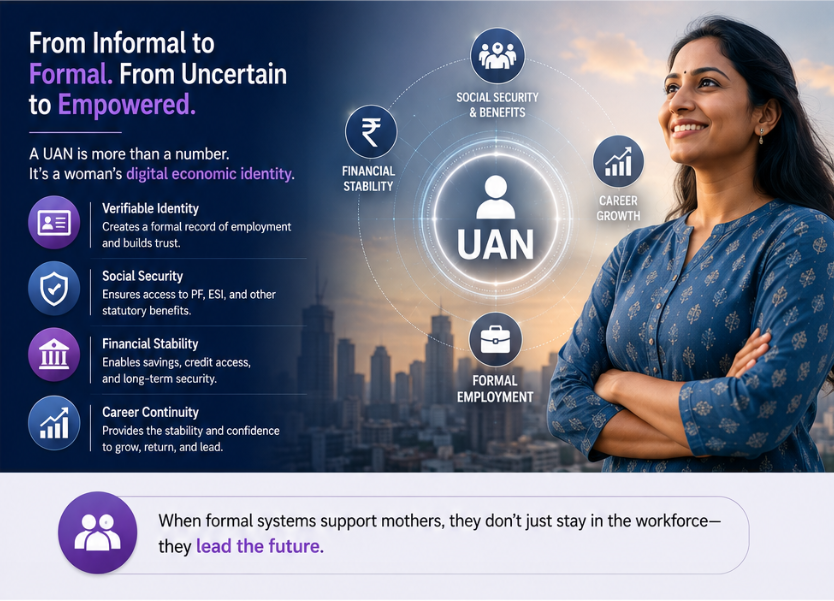
In the first half of FY2026 alone, the industry saw a surge in first-time formal accounts (UANs). For a mother, a UAN is more than a compliance metric; it is a digital economic identity. It transitions a household from the volatility of informal “cash-in-hand” to the stability of verifiable social security and credit history. This predictability is what allows a woman to focus on her career outcomes rather than constantly negotiating the risks of her employment status.
The most critical moment in a mother’s career remains the window following her return. This Mother’s Day, as we celebrate the “climb” in participation rates, we must scrutinize the systems she returns to these important questions:
- Is her position still secure, or has it been “optimized” during her absence?
- Is she judged on her actual impact, or penalized for a lack of “desk time”?
- Does the workplace culture allow her to step back into leadership without bias?
Formal systems answer these questions with clarity; informal environments leave them to chance. When experienced women drop out, we don’t just lose employees; we lose institutional memory, diverse perspectives, and future leadership pipelines.
Formalisation is more than a legal status; it is a commitment to making the workplace “steady” enough to hold the complexities of a new mother’s life. Stability becomes its own kind of support system, easing the mental load and allowing mothers to focus on their work instead of constantly negotiating their right to be there.
Read Also : When Technology, Business, and HR Converge: Why Embedding Ethical AI at Scale Matters
Burnout Isn’t a Time Management Problem—It’s a Leadership Problem
Learning, Education and Pedagogy in the age of AI : Developing Human Capital for the coming Decades
Rethinking Talent in the Age of AI: Why Workforce Agility Starts with the 4Bs
The Rise of the Chief Human Agency Officer: Why Every AI Organization Will Soon Need One