

We often talk about talent gaps in tech. We mention missing skills, thinning pipelines, and stalled career progression. Yet many of the solutions designed to address these gaps remain short-term interventions. They are high-energy initiatives such as conferences, bootcamps, panels, or workshops. They create momentum in the moment, but they rarely build the structure needed for sustained career growth.
Short programs can spark interest. They can introduce skills. They can even open doors. But without continuity, the impact fades. A bootcamp concludes. A conference ends. Inspiration weakens when the next career challenge arises. Momentum without structure rarely translates into long-term progression.
If we want lasting outcomes in tech, we must move from isolated initiatives to integrated talent ecosystems. These are systems designed to support individuals from early curiosity to career maturity, continuously rather than in bursts.
Community as Infrastructure
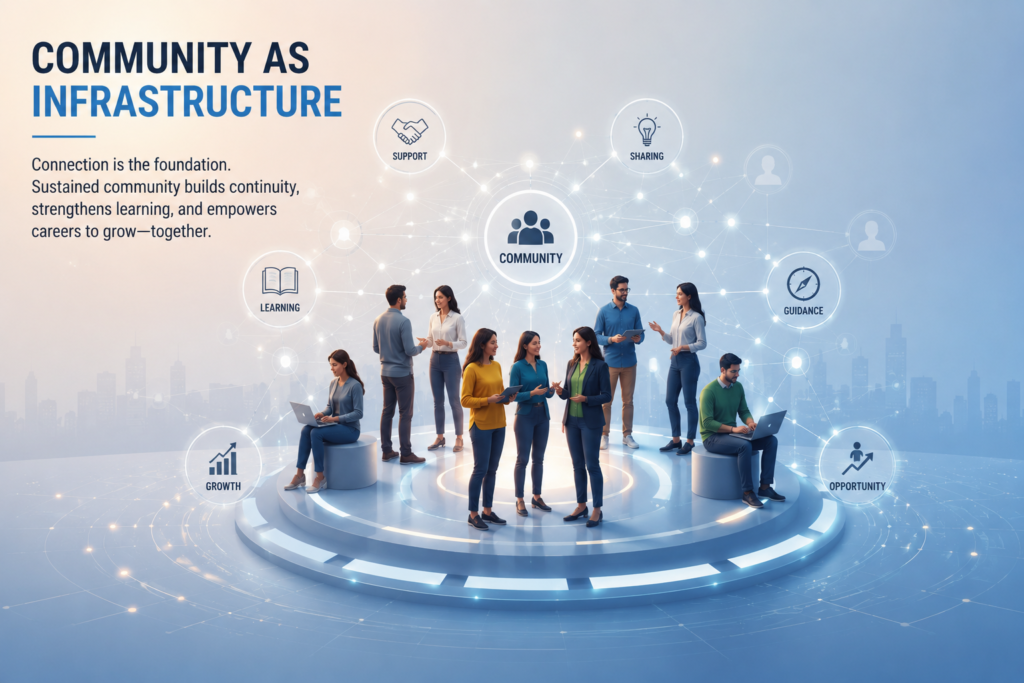
Community is often described as a nice-to-have. In reality, it is infrastructure.
In fast-evolving industries like technology, where roles shift and skills quickly change, individuals need more than content. They need continuity. Sustained connection strengthens learning retention, builds resilience during career transitions, and reinforces professional confidence.
Ecosystems work when they enable long-term relationships. Today’s mentee becomes tomorrow’s mentor. Peers collaborate across roles and organizations. Support extends beyond formal program timelines. Growth becomes compounding rather than episodic.
Conference-driven momentum often fades without systems of support in place. A professional can feel energised after an event and discouraged weeks later after a difficult interview or delayed promotion. That decline is not a personal failure. It reflects the absence of surrounding structure. Ecosystems that endure provide scaffolding through these cycles.
Structured Mentorship, Not Informal Pairings
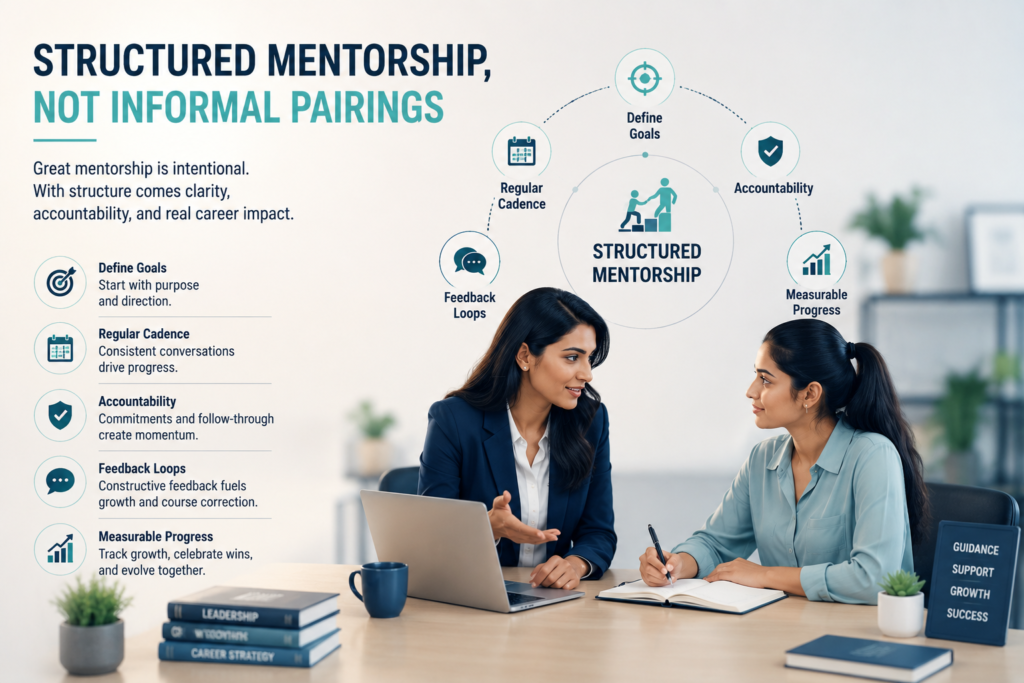
Mentorship is frequently treated as a symbolic pairing. Effective mentorship requires structure. It needs defined goals, regular cadence, accountability, and feedback loops.
In a sector shaped by rapid technological change, mentorship must help individuals translate evolving skills into strategic career decisions. It must provide clarity, not just encouragement. Structured mentorship strengthens decision-making, accelerates progression, and reduces mid-career stagnation.
Without thoughtful design, mentorship becomes inconsistent. With design, it becomes catalytic.
Employer Responsibility in the Ecosystem
Technology does not exist in isolation from employers, and talent development should not either.
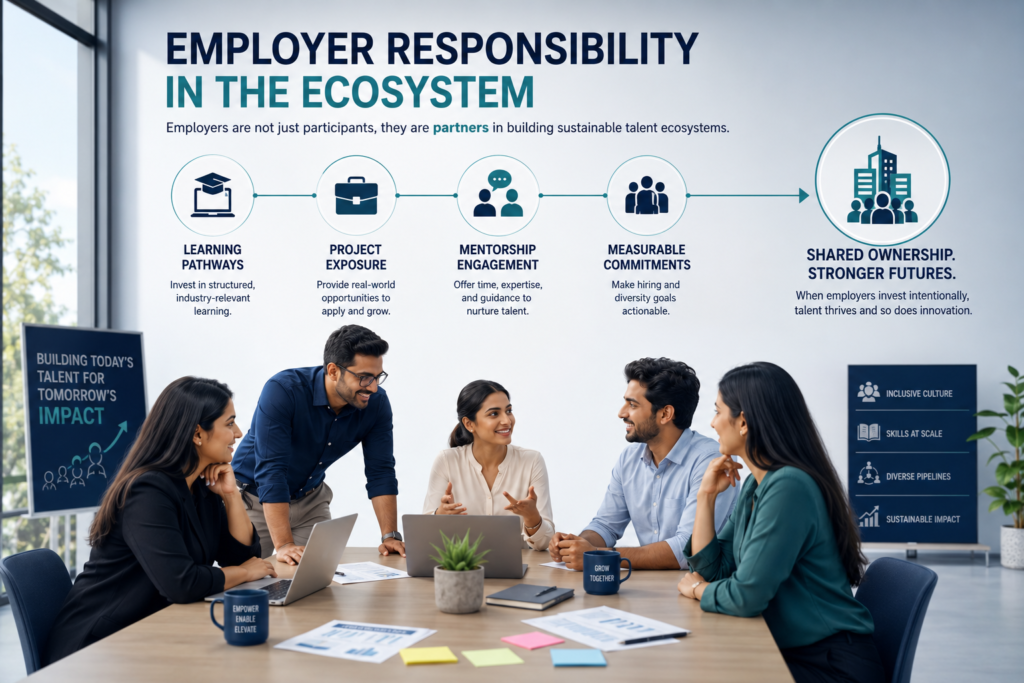
Organizations often contribute through event sponsorship or short-term programs. While valuable, sponsorship alone does not build ecosystems. Employers must move toward shared ownership of talent development. This means contributing structured learning pathways, offering project exposure, participating in mentorship, and making measurable hiring commitments.
When organizations integrate talent development into operational strategy rather than treating it as an adjacent initiative, clearer pathways emerge. Learning aligns with market demand. Skill development connects to real opportunity. Progression becomes intentional rather than incidental.
Talent underutilization is not only a workforce issue. It is also an economic one. In expanding digital economies, failing to sustain participation and progression limits innovation capacity and long-term growth.
Measuring What Matters
The metrics we prioritize shape the systems we build.
If we measure attendance, we design events. If we measure hours delivered, we design programs. If we measure career progression, we design ecosystems.
Sustainable talent systems require outcome-oriented measurement. They require tracking not just participation, but durability. Who remains in the industry? Who advances? Who returns after career breaks? Who transitions into leadership?
What is not measured rarely improves. Ecosystem design must be informed by long-term outcomes, not just immediate engagement.
Building for Durability, Not Drama
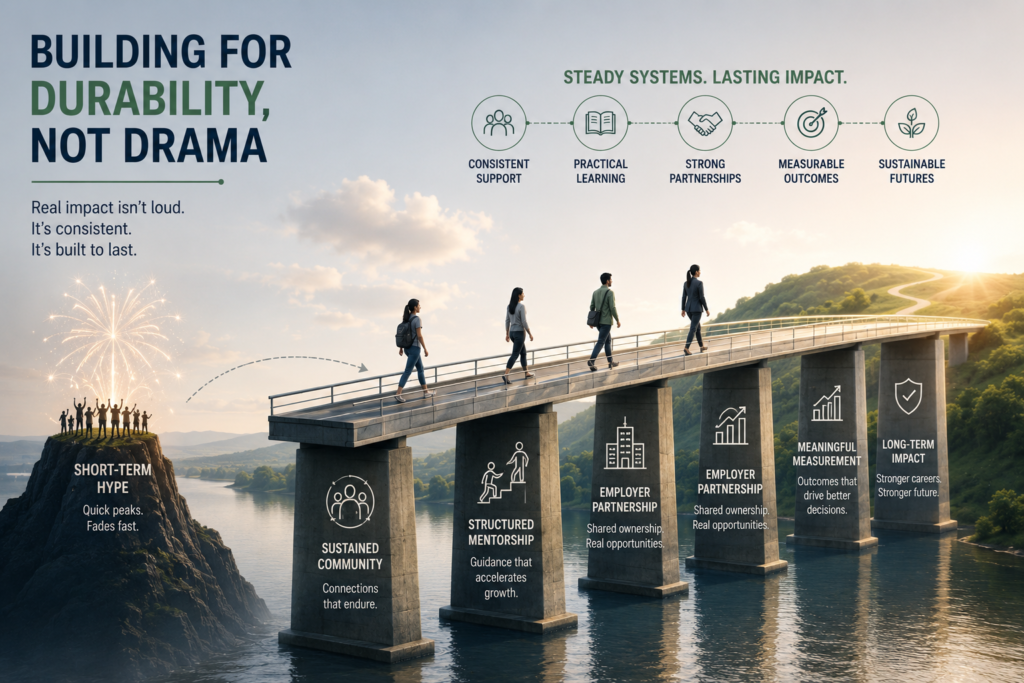
Building a year-round talent ecosystem does not require dramatic reinvention. It requires disciplined consistency.
It begins with sustained community infrastructure that outlasts individual programs. It integrates practical learning into professional routines. It embeds structured mentorship with shared accountability. It requires employer participation that extends beyond symbolic support. It measures impact through real career movement.
This work is steady rather than dramatic. It does not rely on short peaks of visibility. It builds durable foundations that carry individuals through technological, organizational, and economic change.
Sustainable talent ecosystems do more than fill roles. They strengthen retention, deepen expertise, increase workforce resilience, and expand long-term economic potential.
The question for organizations today is not whether they support talent development. It is whether they are designing systems that sustain it.
Opportunity in tech should not exist for a moment. It should endure across a career and across generations.
Read Also : When Technology, Business, and HR Converge: Why Embedding Ethical AI at Scale Matters
Burnout Isn’t a Time Management Problem—It’s a Leadership Problem
Learning, Education and Pedagogy in the age of AI : Developing Human Capital for the coming Decades
Rethinking Talent in the Age of AI: Why Workforce Agility Starts with the 4Bs
The Rise of the Chief Human Agency Officer: Why Every AI Organization Will Soon Need One