

As organizations navigate rapid technological change and increasingly complex global business environments, leadership today demands far more than technical excellence. It requires inclusive thinking, resilience, mentorship, and the ability to cultivate diverse perspectives that drive innovation.
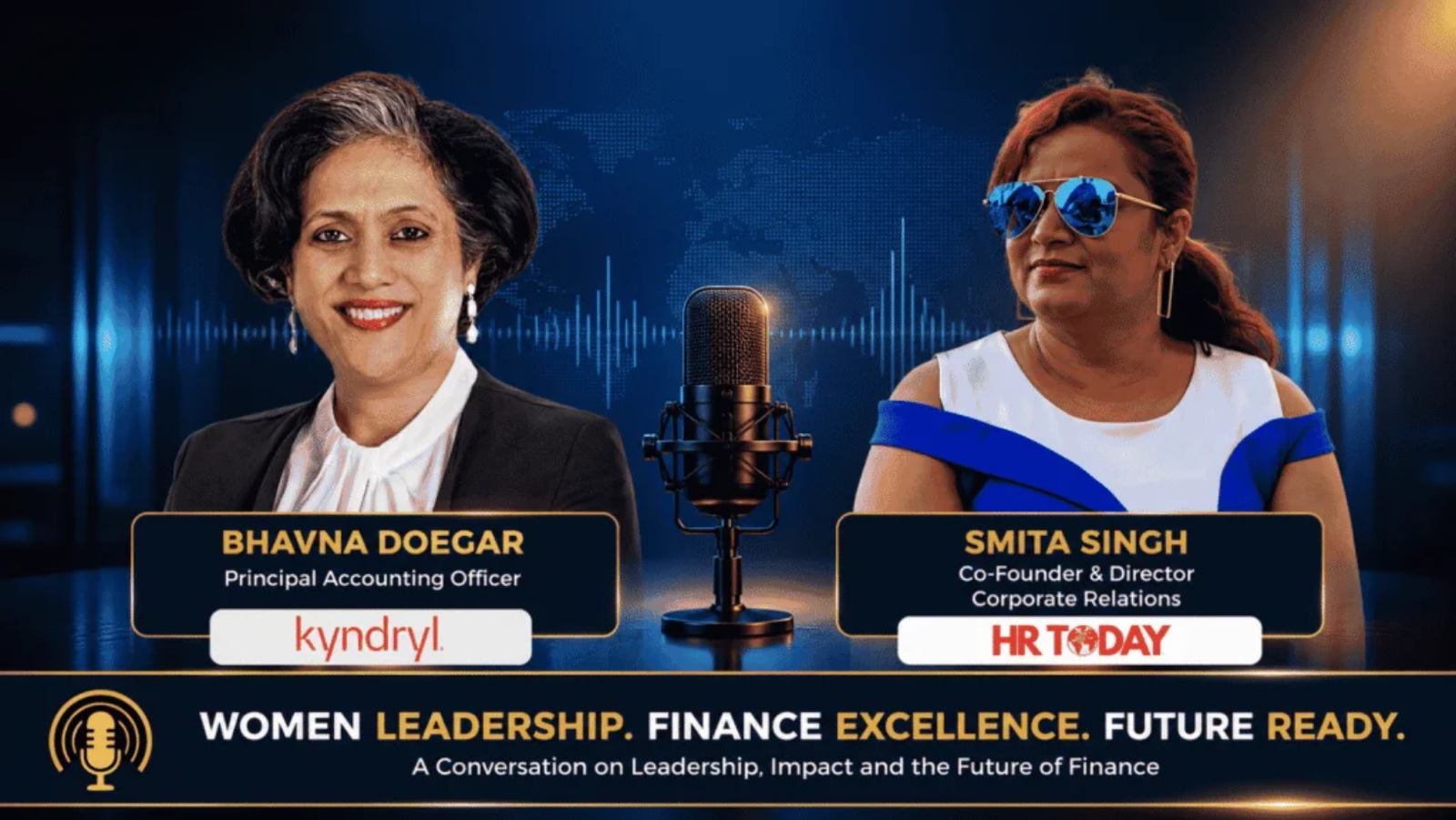
In this insightful conversation for the Leaders Speak section of HR TODAY, Smita Singh, Co-Founder and Director – Corporate Relations, HR TODAY, speaks with Bhavna Doegar, Principal Accounting Officer at Kyndryl, about the evolving role of women in finance leadership, creating intellectually diverse teams, empowering future women leaders, and the timeless principles that shape successful careers. Drawing from over two decades of leadership experience, Bhavna shares practical insights that are relevant for professionals across industries and career stages.
- Over the years, how have you seen the landscape for women in leadership, particularly in finance, evolve?
This has changed very dramatically since I began my career at the turn of this century. I remember at my B-school in 1999, there were just 15% women in my MBA class, and those of us majoring in Finance were less than 5%. Today more than 50% of college graduates entering corporate finance roles are women. While this does narrow down as we go up the pyramid, it’s still dramatically better than before. 18% of the Fortune 500 Companies have a Woman CFO today vs just 5% in the year 2000. The good news for women in Kyndryl is that according to Grant Thornton’s Women in Business Report, technology is the best sector to grow a finance career as a woman, with 47% of mid-market tech companies having women CFOs, and 30-35% of all senior finance roles in our sector led by women executives. We certainly are eager to emulate that in Kyndryl.
- Despite the progress made, what challenges continue to hinder women from advancing into senior leadership roles, and what can organizations do to address them?
This has been a very personal passion for me – because I have seen the best and brightest women talent navigate their life stages to harmonize their personal, social and professional goals. It is just human for all of us, not just women, to have different level of travel, work location and hours flexibility needs in different life stages. However, it can be especially tough for women who are still largely the primary care givers, both for kids and for dependent elders, in most societies. Some of those are personal choices, but for us in Kyndryl providing support structures that help returning moms achieve their full potential in their careers is not an altruistic goal – it is about trying to have our best talent get into the best roles that solve our most complex business problems.
- In your view, how can leaders create an environment where diverse perspectives are not only encouraged but also drive stronger business outcomes?
I think different perspectives, which is ‘intellectual diversity’ is perhaps the toughest one to really achieve – and then nurturing it is the next level. First, as a leader we need to know what these diverse experiences and perspectives bring. To me, they bring a team together that finds solutions that adapts better, scales faster, and remains resilient despite volatile changes. Hence it’s a powerful goal to have. Then we need to foster the environment. I try to consciously bring teams together that look different, have different domains, have a good mix of tenure and fresh experiences, and then help them become a cohesive team. I remain conscious that decision making sometime slows down while diverse teams go through team bonding stages – so I try to be the glue or thread that binds them to the ultimate mission of the project or the team.
- What guidance would you offer to young professionals seeking to build confidence, establish credibility, and develop a strong leadership presence early in their careers?
Wow, this is a very broad question. I would point to a very useful little acronym my own mentors in GE gave me when I was a young professional. It’s called the “PIE” Model – simply speaking – your career trajectory is a factor of “Performance, Image and Exposure”. And to me that simple acronym has held true over 25 years.
So, how do you manage the P.I.E ? Performance is usually the easiest to gauge – the impact you are making in your roles is annually assessed, so you will get feedback on that. The “image” is reflective of how you perform your roles and how you show up as a team mate to your peers, to your juniors, cross functional stakeholders and to senior leaders. For this, actively seek feedback – and gauge what you are hearing about your image vs your self-image, and be conscious of blind spots you may have. Finally, ‘exposure’ is about taking initiative to do stretch projects, raising your hand to do tough and diverse roles that push your comfort zone.
- What responsibility do senior leaders have in nurturing and empowering the next generation of women leaders in the finance and technology industry?
I can quite honestly say that I have walked on the shoulders of giants. I would not have any career without senior leaders who took chances on me, gave me roles I thought I wasn’t ready for and then batted for me when things got tough, stood behind me while I took tough calls and mentored, coached and cheered me through all of it. So, quite simply at a personal level – I see this as a mission to pay-it-forward for other women leaders, so they too can be the best version of themselves – not just as professionals but in all aspects of their lives.
Summary
Bhavna Doegar’s perspectives reinforce an important leadership truth: sustainable organizational success is built on people, purpose, and inclusion. While significant progress has been made in advancing women into leadership, the journey ahead requires organizations to create environments where diverse talent can thrive, grow, and lead with confidence. Her emphasis on intellectual diversity, mentorship, continuous feedback, and the “Performance, Image and Exposure (PIE)” framework offers valuable guidance for professionals aspiring to build meaningful and impactful careers. As workplaces continue to evolve, leaders who invest in developing people will ultimately shape stronger businesses and a more inclusive future.
Bhavna Doegar is the Principal Accounting Officer at Kyndryl, where she leads Global Controllership, Corporate FP&A, and worldwide pricing functions. A globally accomplished finance executive with over 25 years of leadership experience, she has held senior roles across Kyndryl, Genpact, and GE, leading large-scale business transformations, IPOs, M&A initiatives, and finance organizations across the United States, China, the Netherlands, and India. An MBA in Finance from SPJIMR and an alumnus of MIT Sloan School of Management’s AI for Business Program, Bhavna is passionate about building high-performing teams, fostering inclusive leadership, and driving sustainable business growth through financial excellence and strategic innovation.
Read Also : When HR “Produces Nothing”: A Response to Jennifer Sey’s Anti-HR Vision
The Fine Balance: Navigating Work, Life, and Mental Wellbeing
Mind the Leadership Gap – From Learning to Real-World Impact
How the Adecco Group is empowering its employees for the future of work