


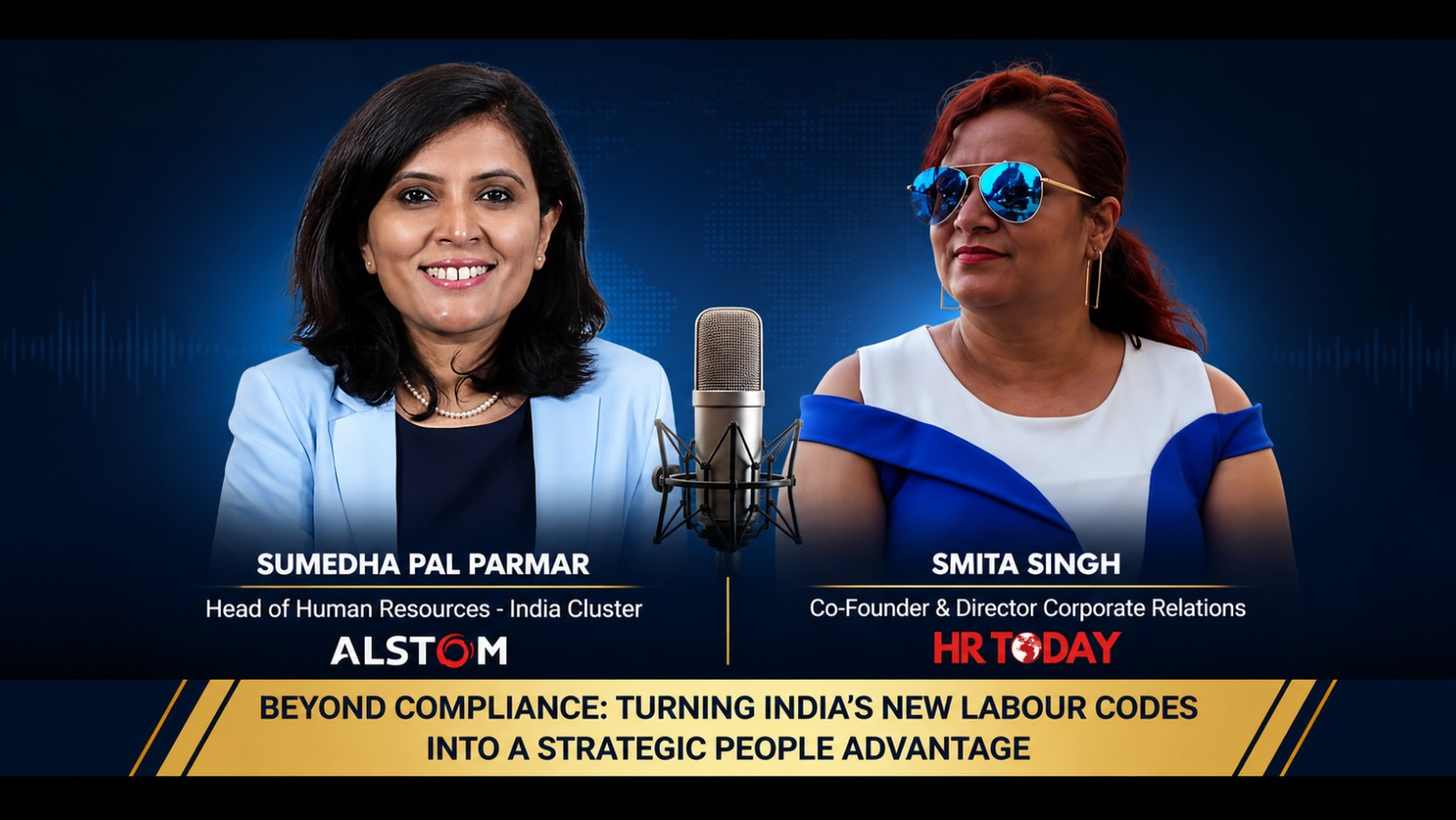
India’s new labour codes represent one of the most significant reforms in the country’s employment landscape in decades. While much of the public discourse has centred around regulatory compliance, leading organizations are viewing these reforms through a broader strategic lens—one that strengthens employee trust, financial security, and long-term workforce sustainability. In this exclusive conversation with HR TODAY, Smita Singh, Co-Founder & Director – Corporate Relations, HR TODAY, speaks with Sumedha Pal Parmar, Head of Human Resources – India Cluster, Alstom, about how Alstom is approaching the transition with transparency, employee-centric communication, and a future-ready people strategy. From compensation restructuring and social security to talent attraction and organizational agility, she shares valuable insights into how labour reforms can become a catalyst for building a stronger employer value proposition.
- What is Alstom’s overall perspective on the implementation of the new labour codes and their impact on India’s workforce ecosystem?
India is entering a pivotal phase of labour market transformation, with the new labour codes strengthening transparency, fair pay, social security, safety, and inclusion across the workforce ecosystem. As the business landscape continues to evolve, these reforms present a significant opportunity for organizations like ours to build a strategic advantage in people management. This emerging workforce paradigm enables us to design more agile, compliant, and future-ready practices, while ensuring that every employee is holistically supported both in the near term and through long-term financial and social security frameworks.
- Do you believe the new labour codes represent a broader shift towards long-term employee welfare and financial security?
Yes, the new labour codes do reflect a broader and intentional shift toward long-term employee welfare and financial security, rather than being limited to short-term regulatory compliance. From an organizational perspective, this evolving framework encourages companies to move beyond a“check-the-box” compliance approach toward a more thoughtful and objective-driven people strategy. Transparent compensation structures, consistent benefit frameworks, and clearly defined obligations collectively push organizations to design more sustainable and employee-centric reward models. In essence, the labour codes are not merely regulatory reforms they represent a recalibration of the employer–employee contract, where agility and flexibility are balanced with accountability and long-term welfare. This creates an ecosystem where employee well-being is embedded into the system design itself, rather than treated as an afterthought.
- Have Alstom employees experienced any changes in take-home pay or salary structuring as a result of the new labour codes? If so, how has the organization approached employee communication around this transition?
Our approach to salary restructuring has been anchored in transparency and employee assurance. While aligning with the new labour code requirements, we ensured there was no impact on take-home pay, and focused on clear, proactive communication so employees feel informed, confident, and supported through the transition. The revised structure reflects a more transparent and standardized compensation approach, particularly with respect to the definition of wages and alignment with statutory benefits. At the same time, we were conscious of maintaining continuity for employees in terms of their immediate earnings.
Employee communication about the change of the salary structure was important to us. We ensured clear and transparent communication with the employees by sending direct emails, publishing policies with FAQs and training HR Managers for additional support. Overall, the intent was to ensure that while we transition to a more compliant and future-ready compensation framework, employees feel well-informed, reassured, and supported throughout the process.
- How has Alstom communicated the implications of the labour code changes to employees, particularly around PF, gratuity, and compensation restructuring?
We have taken a structured and employee-centric approach to communicating the implications of the labour code changes, particularly across areas such as PF, gratuity, compensation restructuring, and leave policies.
Detailed policy documents outlining the revised approach have been published on our intranet, covering all key elements of the new framework. These have been supported by comprehensive and easy-to-navigate FAQs, addressing common queries from both pre- and post-labour code implementation perspectives.
To ensure employees receive contextual and personalized guidance, our HR teams have been extensively trained in the changes, enabling them to address specific queries beyond the documented policies.
- What steps have Alstom taken to ensure employees understand both the immediate and long-term value of increased statutory contributions such as provident fund savings and gratuity accruals?
Our policy documents go beyond outlining the structural changes—they clearly articulate the purpose and underlying rationale of these provisions, helping employees connect the changes to their overall financial well-being.
To make this more tangible, we have included illustrative examples and scenarios that demonstrate the impact of these contributions in both the near term (e.g., salary structuring) and the long term. This enables employees to better appreciate how increased statutory contributions translate into stronger financial security over time.
Overall, our focus has been to ensure that employees do not view these changes as technical adjustments, but as meaningful enablers of long-term financial stability and well-being.
- Looking ahead, how will these labour reforms influence Alstom’s broader talent attraction, skilling, and retention strategies in India?
For us, the labour reforms are not just about compliance, they’re a strategic opportunity to strengthen our employee value proposition. A more aligned and structured framework around pay, social security, and benefits helps us build trust and long-term financial security for our employees. Going forward, our focus is on creating a holistic people ecosystem that integrates evolving workforce models, invests in capability building, and ensures employees feel supported not just in the short term, but across their entire career journey with us.
Summary
As organizations prepare for the implementation of India’s new labour codes, success will depend not merely on regulatory compliance but on the ability to build trust through transparent communication and employee-first practices. Alstom’s approach demonstrates that when reforms are implemented with clarity, empathy, and strategic intent, they can strengthen organizational resilience while enhancing employee well-being and long-term financial security. The conversation with Sumedha Pal Parmar offers HR leaders a practical roadmap for navigating one of India’s most important workplace transformations—turning legislative change into a lasting competitive advantage in talent management and employee experience.
Sumedha Pal Parmar is the Head of Human Resources – India Cluster at Alstom, where she leads the people strategy for one of India’s largest sustainable mobility organizations. With over two decades of HR leadership experience across global organizations, she has built deep expertise in talent strategy, organizational development, change management, leadership development, compensation, employee relations, and HR transformation. Prior to Alstom, she spent nearly 20 years at Honeywell, leading HR, talent acquisition, diversity, and people strategy across India, Asia Pacific, and multiple global markets. Known for driving large-scale organizational transformation in complex matrix environments, she is also a Honeywell Green Belt-certified professional with a strong track record of building future-ready organizations and high-performing cultures.