


Artificial Intelligence today operates far beyond controlled test environments. It runs on busy highways, congested city streets, warehouses, and delivery routes, interacting with people, systems, and decisions in real time. As AI increasingly powers mission-critical outcomes, ethical AI needs to move from theory to practice.
Transportation and logistics are the best examples of this change, where AI is no longer confined to dashboards or back-end analytics. It is becoming part of the everyday flow of work, shaping how safety is analysed, how incidents are understood, how coaching is delivered, and how decisions are made at scale.
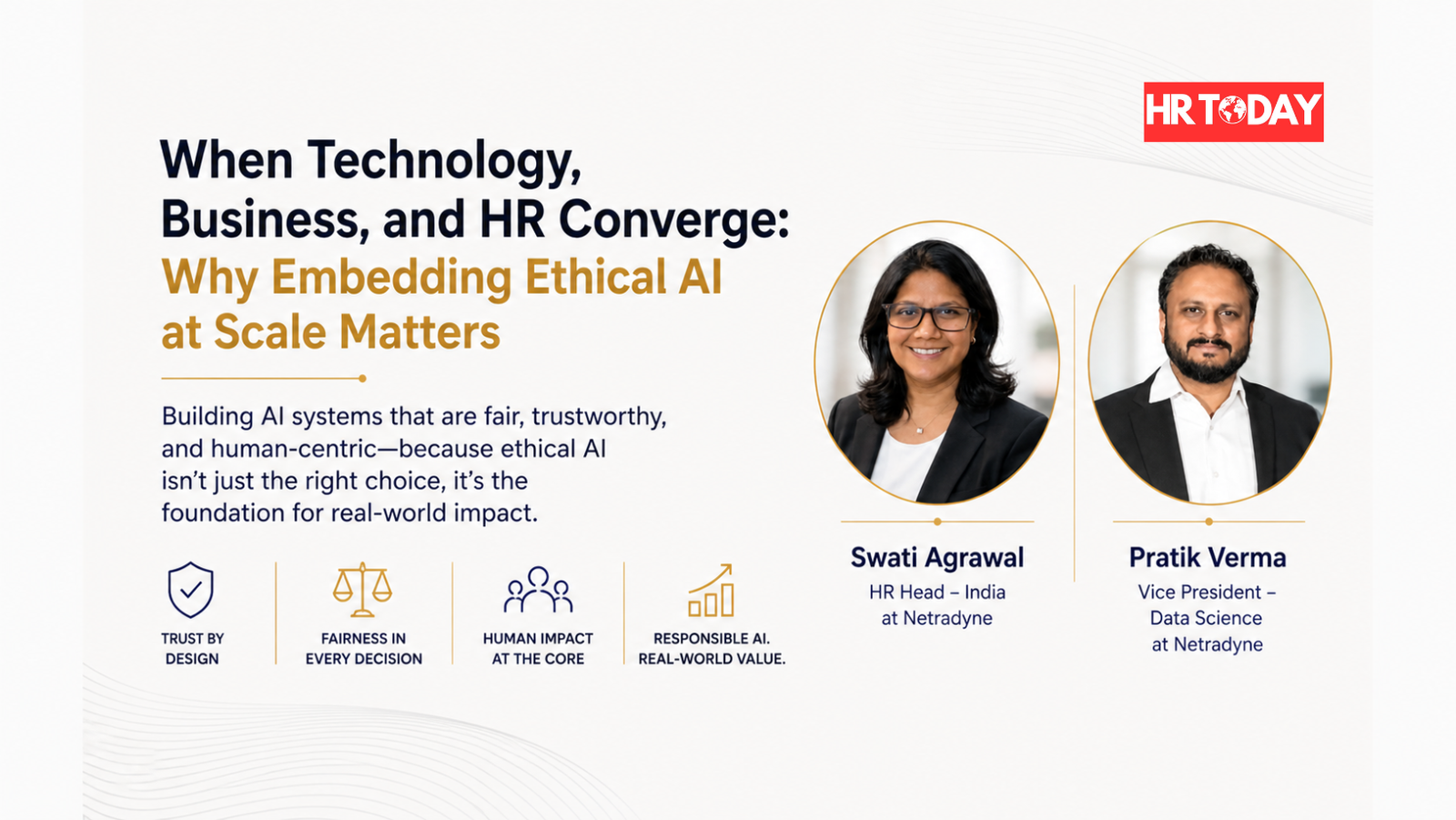
In such environments, ethics cannot remain a philosophical discussion. It becomes an engineering, organisational, and human imperative, because when AI influences safety scores, driver coaching interventions, and workplace outcomes, fairness, transparency, and accountability have to be built into the system by design. That is where the convergence of technology, business, and HR becomes essential.
Ethical AI Is a System, Not a Safeguard
Ethical AI is often reduced to bias mitigation or compliance. In practice, it runs much deeper. It is reflected in how systems are designed, how data is interpreted, and how decisions affect people in the real world. In physical-world environments, the same action can carry very different meanings depending on road conditions, traffic density, route complexity, or operational pressure. A system that fails to account for that complexity risks mistaking context for misconduct.
This is especially important in transport and logistics, where frontline workers, particularly drivers, are directly affected by how AI reads behaviour and context. In these environments, AI increasingly shapes how driver behaviour is interpreted, how safety events are understood, and how conversations around performance and accountability take place within the organisation. That is why this conversation cannot remain purely technical. The implications are deeply human, and the responsibility for getting it right is unmistakably organisational.
Trust Is the Real Foundation
For AI systems embedded in everyday work, trust is not a soft issue. It is the difference between adoption and resistance. In fleet environments, drivers do not operate under one uniform set of conditions. A long-haul driver managing fatigue over hundreds of highway kilometres and a last-mile driver navigating dense urban roads, pedestrians, and delivery pressure are working under very different realities. If AI systems flatten those differences and interpret them through the same lens, they risk treating context as poor judgment. Once that happens, trust begins to erode not only in the system, but in the organisation deploying it.
Trust also grows when people can see that better data and more advanced AI do more than scrutinise them. In high-stakes situations such as road incidents, a fuller and more accurate record can help distinguish unsafe behaviour from unavoidable circumstances. It can show whether a driver was cut off, forced into a sudden manoeuvre, or responding to road conditions beyond their control. At its best, responsible AI does not only identify risk. It also protects people from being unfairly judged or falsely implicated. That is one of the clearest reasons trust matters so much in AI-led workplaces.
Context Is the Difference Between Accuracy and Fairness
This is why data integrity matters so deeply. Every AI system reflects the quality, intent, and completeness of the data behind it, but in real-world settings, data quality is not only about volume or precision. It is also about whether the system captures the conditions in which work actually happens. Driving behaviour varies across geographies, routes, weather conditions, vehicle types, and operating environments. The same signal can mean one thing on an open highway and something entirely different in a crowded urban corridor.
If those differences are not captured properly, the system may appear objective while still producing skewed interpretations. Increasingly, bad context is becoming the new bad data. For technology teams, that is a design challenge. For HR leaders, it raises a more fundamental question about whether people are being evaluated through a fair representation of their work. That is where the conversation moves from technical accuracy to workplace fairness.
Bias Is Not Just a Model Issue
Bias is often treated as something that can be fixed through stronger validation or better testing. But in practice, its consequences are much broader. A system may perform well in aggregate and still produce uneven outcomes across roles, routes, geographies, or operating conditions. What looks like model bias in development becomes, on the ground, a question of workplace equity. It affects how people are coached, how performance is interpreted, and how justly they feel they are being treated.
That is why bias mitigation cannot be a one-time exercise. It requires continuous scrutiny, not only of model performance, but of how outcomes are actually experienced by people. It also requires leaders to ask harder questions than most organisations are used to asking. What biases might exist in the system? Who could be excluded or misread? What unintended consequences may follow if context is not adequately understood? In safety-critical AI, fairness has to be treated as a living discipline, not a box to be checked.
HR’s Role Is Becoming More Structural
As AI becomes more deeply embedded in how work is evaluated and experienced, HR’s role is also changing in important ways. This is no longer just a technology question or a compliance mandate. Ethical AI is an organisational capability that has to be designed, reinforced, and scaled. HR leaders therefore have to work more closely with business and technology teams to shape not only adoption, but the culture and judgment around it.
That responsibility begins with leadership, but it also extends into how organisations build talent from the start. The way engineers and data professionals are taught to think about fairness, accountability, and bias will ultimately shape how systems are built. Organisations that invest early are far more likely to create systems that are ethical by design rather than retrofitted for compliance later. From our experience, this matters enormously. At Netradyne, initiatives such as Transcend have shown the value of introducing early-career talent to responsible AI principles and ethical reasoning from the outset, while leadership development efforts have helped deepen engagement with questions of fairness, governance, and long-term impact in AI-led decision-making.
Trust Is Also an External Signal
There is also a larger strategic reason this matters. Employees increasingly want to work in organisations where the technology they build stands for something credible and responsible. Customers and partners, particularly in safety-critical sectors, are also paying closer attention to transparency, accountability, and trust. In that sense, ethical AI is no longer a reactive obligation. It is becoming part of institutional credibility.
For organisations building in this space, HR enablement becomes central to scaling ethical AI, not as a set of policies, but as a culture that aligns leadership intent, employee behaviour, and external trust. The strongest systems will not simply be the most advanced. They will be the ones people believe are fair, intelligible, and worthy of confidence.
The Way Forward
As AI moves deeper into the fabric of work, the boundaries between technology, business, and HR will continue to blur. The organisations that lead responsibly will not be the ones treating these as parallel priorities. They will be the ones building them together, recognising that the real test of AI is not only whether systems perform, but whether they do so fairly, responsibly, and in a way people can trust.
At scale, that is what ethical AI really demands. It asks organisations to move beyond the language of capability and into the discipline of consequence. In workplaces shaped by AI, success will not be measured only by what systems can do. It will be measured by whether the people affected by them can believe in them.
Read Also : Beyond Job Roles: Nurturing Talent in Evolving Skill Ecosystems
IWork in the Age of AI: Are Indian Organisations Redesigning Jobs – or Simply Automating Them?
Rethinking Talent in the Age of AI: Why Workforce Agility Starts with the 4Bs
The Rise of the Chief Human Agency Officer: Why Every AI Organization Will Soon Need One