

The nature of work has evolved faster in the last few years than it did in the previous two decades and with it, the role of Human Resources has begun to shift.
Historically, HR was oriented toward administration and compliance: policies, handbooks, approvals, guardrails. That framework made sense when employees operated out of a single office, under one supervisor, within a predictable cadence. That environment no longer exists.
Today, teams are scattered over cities and time zones. Workforces are moving fluidly between home, office, and intermediary settings. Four generations work together, each carrying different expectations about work, authority, and success. In this setting, processes alone cannot shape behaviour or sustain alignment.
What binds organizations nowadays is culture.
Not culture in the sense of superficial, poster-ready statements but culture as in the lived experience of how people are treated, how decisions are made, how safe it feels to speak up, and whether effort is really rewarded. It is in this direction that HR is being advanced to a far more meaningful role – not just writing policies but actively shaping how people experience work.
This is culture engineering in practical terms, grounded in behavioral insight, data, and a clear understanding of people. It means recognising what drives different groups, anticipating points of friction, and building systems that consistently enable strong performance.
Processes remain necessary. But when they become the primary way to manage people, they fall apart. In a hybrid setup, no one wants to feel micromanaged. People want to be trusted to do their jobs and to have a clear sense of purpose. When there’s clarity and autonomy, most employees perform far better than under a rigid checklist of dos and don’ts.
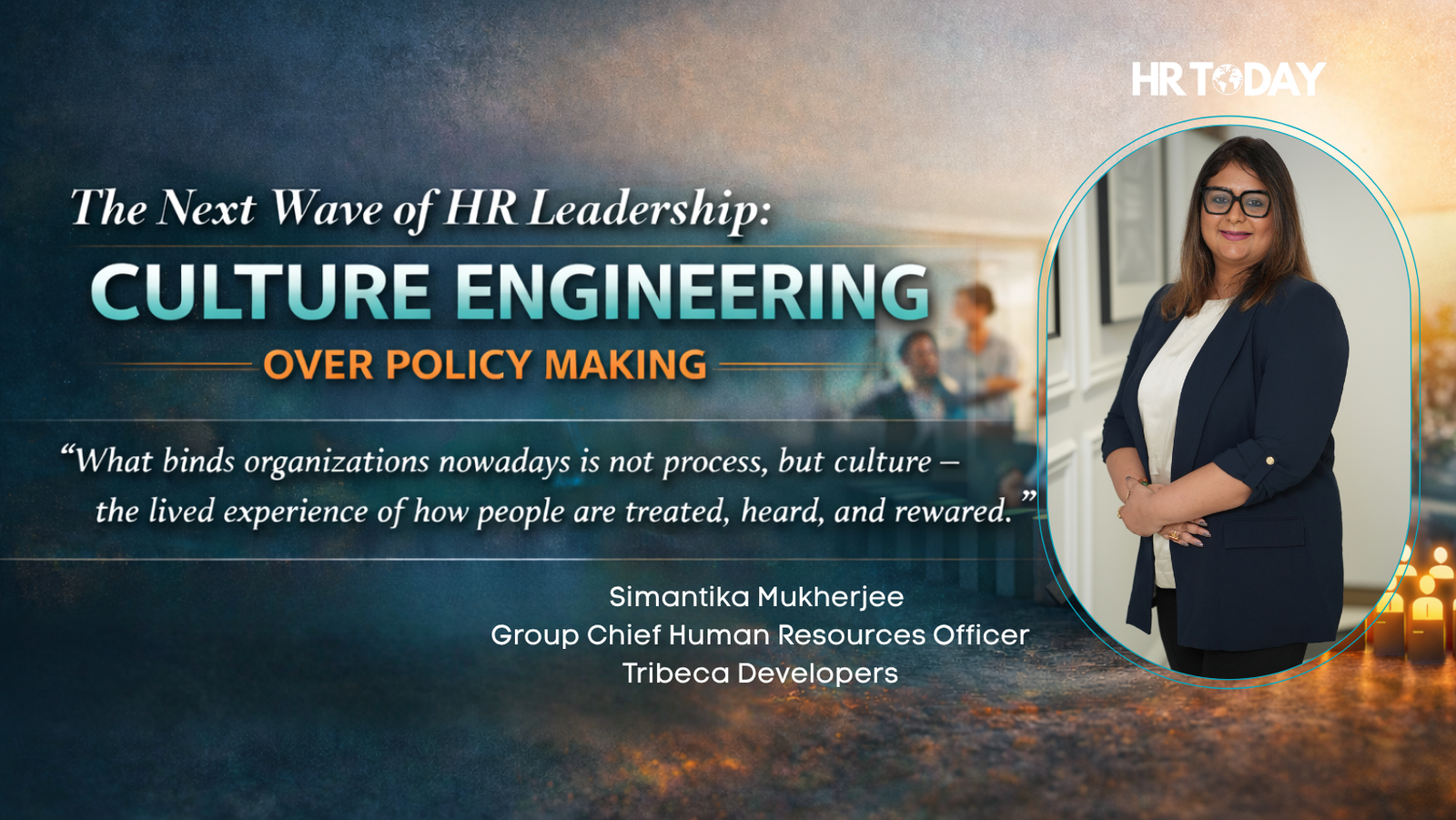
“What binds organizations nowadays is not process, but culture — the lived experience of how people are treated, heard, and rewarded.”
At Tribeca, this is something we are actively working through. As the organization grows, we are evolving our structures and processes to keep pace, finding the balance between policies built for scale and ones that remain deeply human. Our belief is that people are custodians of policy, not the other way around. A policy only works when it sits naturally with the people it governs. That means moving away from rigid frameworks toward ones that are more fluid, more responsive, and more aligned with how our teams actually work.
Technology has further accelerated this shift. Digital platforms, real-time communication tools, and people analytics now connect employees across locations, creating shared experience of work despite physical distance. Beyond productivity, technology reinforces culture by ensuring values, behaviours, and expectations are experienced consistently across the organisation.
HR is no longer a reactive function. It has become increasingly predictive using engagement data, sentiment insights, and behavioural patterns to anticipate challenges, inform leadership decisions, and intervene early, shaping outcomes rather than responding to them.
For us at Tribeca, this shift is not theoretical. It is something we are building in real time. As we scale, we are rethinking what structure means and what processes should look like at each stage of growth. The goal is not to dismantle rigour but to ensure that the rigour we build serves our people, not just our compliance checklists. When policies feel natural to the people who live by them, they stop being rules and start becoming culture.
“When policies feel natural to the people who live by them, they stop being rules and start becoming culture.”
In the real estate industry, volatile markets and long project lifecycles define the operating reality. As projects span years and teams evolve, people dynamics do not always surface immediately. Culture, therefore, must be intentionally engineered. This requires HR to remain closely connected to employees through regular pulse checks, continuous listening, and predictive analysis driving alignment and sustained performance across the project lifecycle.
At Tribeca, HR is moving from a policy-driven approach to culture-led leadership. We believe success belongs to those organizations where values are not just written down but lived every day through actions and behaviour.
Read Also : The Great Rewiring: What India’s new labour codes really mean for employers
India’s Airline Crisis: When Efficiency Overrides Resilience
Rethinking Talent in the Age of AI: Why Workforce Agility Starts with the 4Bs