

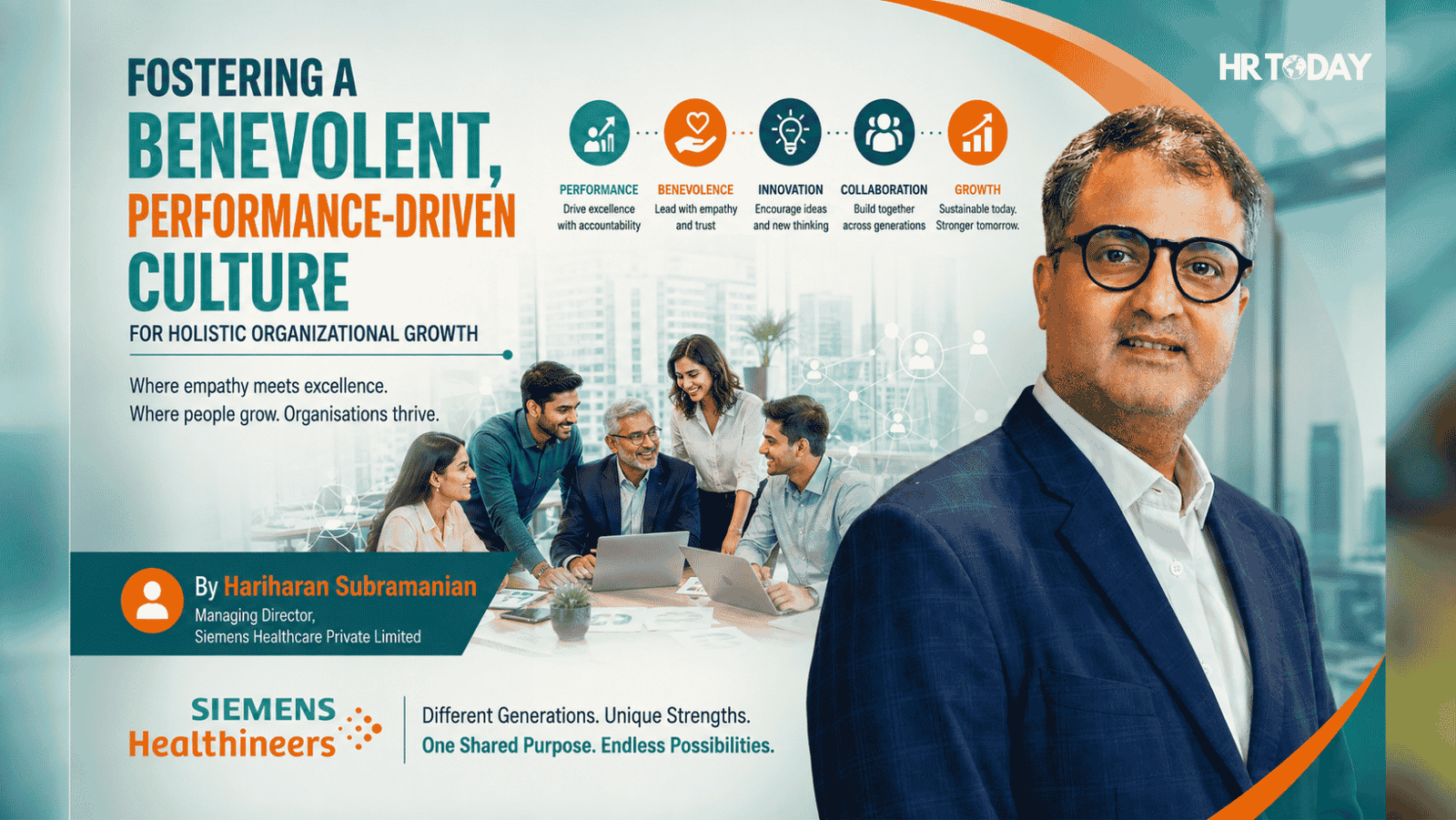
What kind of organizational culture must be built to accelerate performance while enabling continuous innovation? Often in boardrooms, this one question increasingly defines long-term competitiveness. As technological disruption accelerates and workforce expectations evolve, culture is no longer just a soft organizational attribute. It has become a strategic capability that determines how effectively companies innovate, sustain, and translate strategy into execution.
From years of observing organizational transformation across global enterprises, one insight that stands out is that performance-driven cultures that lack empathy eventually stagnate, while benevolent cultures without accountability struggle to deliver results.
Sustainable growth lies in integrating both and building environments where high standards coexist with trust, mentorship, and continuous learning.
Organizations today operate in an environment shaped by rapid technological advancement, shifting workforce expectations, and evolving leadership paradigms. Traditional hierarchies are steadily giving way to collaborative leadership ecosystems where ideas move more fluidly across levels and disciplines. The organizations that remain resilient are those that nurture a culture grounded in benevolence and performance, and where people are empowered to grow, while standards of excellence remain uncompromised.
Technology-driven transformation for consistent growth
A growth-oriented organizational culture rests on a few foundational principles. The first is a learning mindset. Continuous development must extend across all levels of the organization, from entry-level professionals to senior leadership. In sectors driven by innovation and precision, such as healthcare technology, learning cannot remain episodic. It must be embedded into daily practice through structured training, knowledge exchange, and cross-functional collaboration.
Equally critical is psychological safety. Employees should feel comfortable sharing ideas, questioning status quos, and proposing improvements without any fears. When individuals are confident that their voices will be heard, organizations unlock a broader spectrum of insights and creativity. This openness often becomes the catalyst for meaningful innovation.
Interplay of experience
One of the most significant opportunities that modern organizations can leverage is empowering young professionals. Younger employees enter the workforce with distinct strengths that are relevant in an evolving environment. Many bring digital fluency, an instinctive understanding of emerging technologies, and an ability to navigate complex information ecosystems. Their perspectives align closely with evolving customer expectations and new models of service delivery.
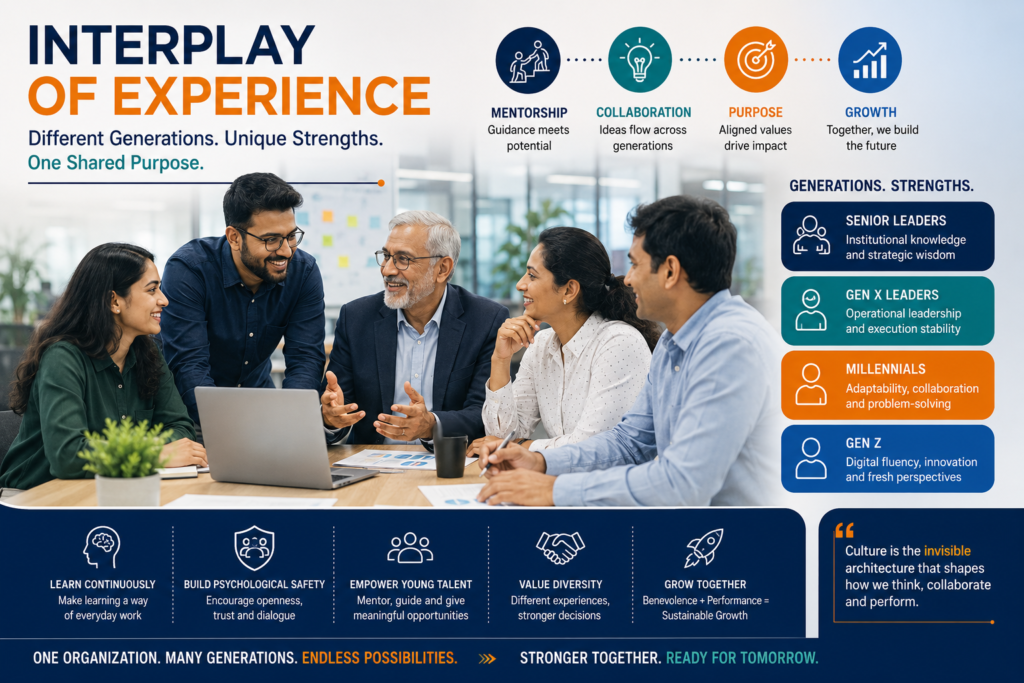
When mentored effectively, shown the right path, and given meaningful opportunities, young leaders contribute agility and fresh thinking that can accelerate organizational transformation. However, this empowerment works best when it is complemented by guidance from experienced professionals who provide context, perspective, and strategic direction. This interplay of experience and emerging leadership highlights the importance of generational diversity as a strategic advantage. Today’s workforce frequently includes senior professionals, GenX leaders, millennials, and GenZ employees working side by side, with each group bringing unique strengths.
Senior leaders bring institutional knowledge and strategic wisdom to the table that they have developed through years of navigating decisions under varied situations. Mid-career professionals often provide operational leadership and stability that leads to consistent execution. Millennials and GenZ employees bring adaptability, digital expertise, and a strong desire to innovate. When these strengths are aligned under a shared purpose, generational diversity becomes a powerful growth engine. The cross-pollination of ideas across age groups enriches decision-making and accelerates organizational growth.
Organizational culture today is progressing beyond policy documents or organizational charts. It is shaped through everyday actions such as a leader’s response to new ideas, the team’s approach to mitigating challenges, and individuals supporting each other’s development. In organizations where benevolence and performance coexist, growth becomes a shared journey.
For leaders, the challenge ahead is not simply managing a diverse workforce but orchestrating it effectively. The organisations that will define the next decade are those that treat generational diversity as a strategic asset, invest systematically in leadership development, and embed learning into the fabric of their operations.
In an era defined by constant disruption, organisational resilience will be determined by culture. It is the invisible architecture that shapes how people think, collaborate, and perform. Leaders building holistic growth cultures will strengthen their organisations for sustainable growth. They cultivate the leadership pipelines that will guide the organization through the uncertainties of tomorrow and create a value-added differentiation for their people and society at large.
Read Also : How HR Leaders Are Redefining Talent Development for the Future of Work
Selective Increments, Strategic Hiring: How AI Skills Are Reshaping India Inc’s Appraisal Cycle
From Org Charts to Skill Graphs: The Reinvention of Enterprise Design
Rethinking Talent in the Age of AI: Why Workforce Agility Starts with the 4Bs
The HR Leader’s Real AI Problem Is Not Adoption. It Is Architecture.