

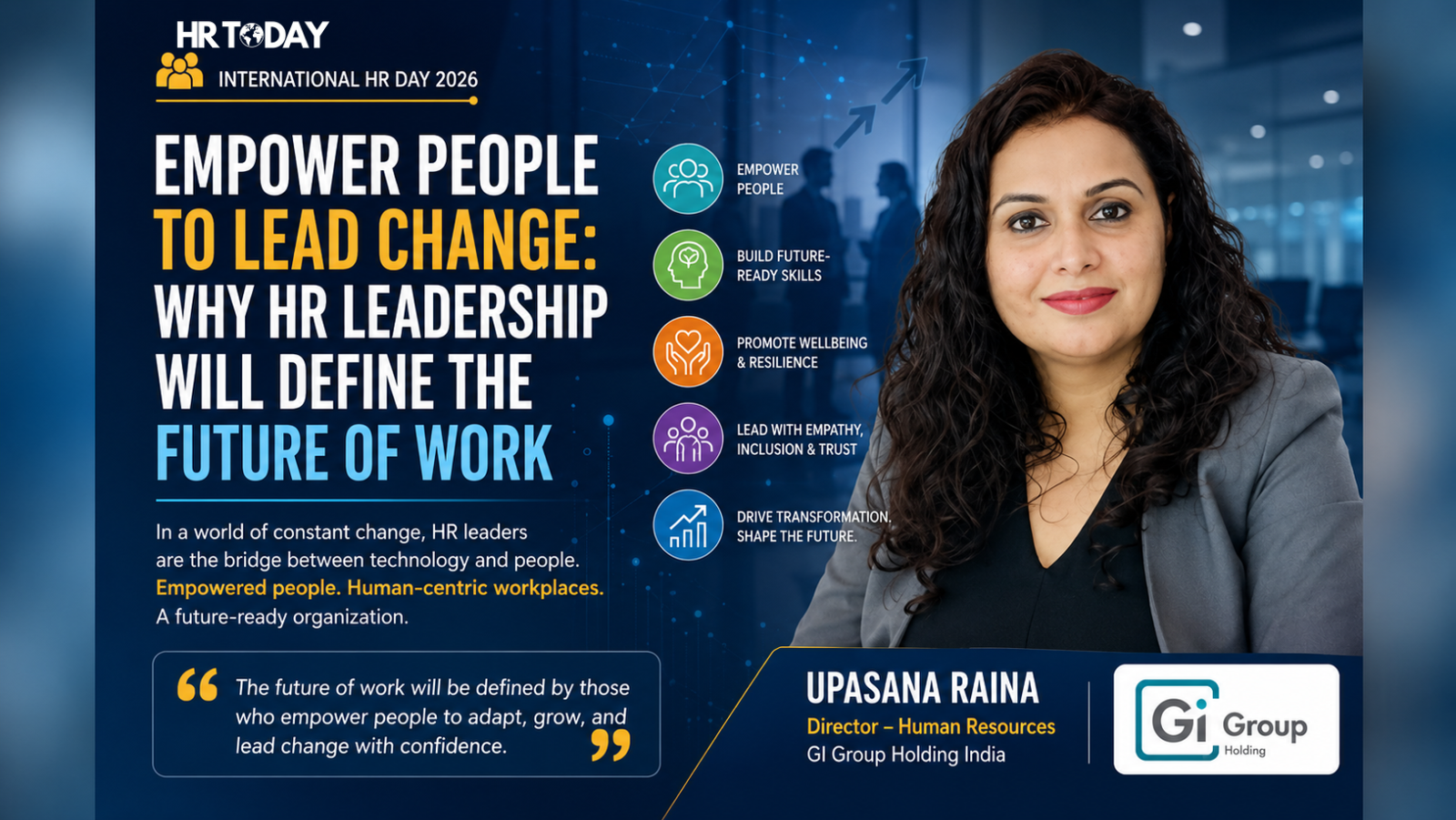
As workplaces around the world rapidly evolve due to artificial intelligence and automation, change has become a constant part of business. Organizations are experiencing one of the most significant transformations in the history of work, where technology is reshaping not only how tasks are performed and productivity is achieved, but also the nature of jobs, the skills employees require, the qualities leaders must possess, and the culture of the workplace itself.
In this environment, the concept of “Empower People to Lead Change” has become more important than ever. It highlights the need for organizations to rethink how they approach and manage change. True transformation occurs when employees are equipped with the right skills, mindset, and support to navigate uncertainty, embrace new ways of working, and actively contribute to organizational growth and innovation.
At the center of this transformation is the Human Resources department. Today, Human Resources is no longer limited to recruitment or employee satisfaction. Instead, it has evolved into a strategic function that plays a critical role in building a resilient, adaptable, and future-ready workforce capable of thriving in a constantly changing world.
Humanizing Transformation in the Age of Artificial Intelligence
Artificial intelligence and technologies are giving businesses a lot of new opportunities. Organizations are using intelligence to make their operations better make customers happier make better decisions and get more work done. While technology is making things change faster the real challenge is making sure people can change too.
Many employees are feeling uncertain about what skills they will need what their workplace will be like. If their jobs will still be relevant. A lot of professionals have to adapt to technologies and work environments really quickly. This is where organizations need to understand that digital transformation will not work without transformation.
Technology can make things more efficient. People are what make innovation, creativity, collaboration, empathy and trust happen. Organizations that only focus on using tools without helping their employees get ready for the change risk making employees resistant, disengaged and culturally disconnected.
So Human Resources leaders have an important job to do. They need to make sure that employees do not see advancements as a threat but as a chance to grow and reinvent themselves.
The modern Human Resources function is now closely tied to the business strategy. Human Resources leaders are expected to guide organizations through changes while balancing what the business needs with what the employees need. This means moving from just doing transactions and towards being a transformational leader.
Human Resources leaders are expected to build strategies for the future workforce predict what skills will be needed, create a culture that is agile and adaptable build trust with employees when things are uncertain create a workplace that is inclusive and safe and enable continuous learning and innovation. Importantly Human Resources needs to create an environment where employees feel empowered to participate in change not just react to it.
Building Future-Ready and Human-Centric Workplaces

One of the defining characteristics of today’s workplace is the rapid pace at which skills become outdated. As job roles continue to evolve, continuous learning has become a business necessity rather than an option.
Progressive organizations are investing heavily in employee development through learning initiatives, leadership programs, AI-powered training, and future-skills development. However, preparing employees for the future involves more than just technical expertise.
Human skills such as emotional intelligence, creativity, communication, collaboration, adaptability, and resilience are becoming increasingly valuable in an automated world. HR leaders therefore carry the dual responsibility of helping employees adapt to technological advancements while also strengthening the uniquely human capabilities that technology cannot replace.
At the same time, the rapid pace of workplace transformation can lead to stress, uncertainty, and emotional fatigue. Hybrid work models, constant digital connectivity, and evolving performance expectations have significantly impacted employee wellbeing. As a result, emotional resilience has become essential for both individual and organizational success.
This is why employee wellbeing can no longer be treated as secondary. Modern HR leaders are placing greater emphasis on mental health support, flexible work policies, psychological safety, and empathetic leadership practices. Organizations that prioritize employee wellbeing not only support their people but also strengthen long-term productivity, engagement, and workplace culture.
As organizations increasingly adopt AI-driven technologies, there is also a growing need to ensure that transformation remains ethical and inclusive. While AI systems can improve efficiency and decision-making, they also raise important concerns around bias, fairness, transparency, and employee trust.
HR leaders therefore play a critical role in ensuring that technology is implemented responsibly and with accountability. Human-centric transformation means involving employees in conversations about change, representing diverse perspectives in decision-making, and ensuring workplace policies remain fair, inclusive, and employee-focused.
Ultimately, the future workplace must strike a balance between technological advancement and human values — combining innovation with empathy, inclusion, fairness, and trust.
The Future of Work Will Be Defined by People
The future of work is not about artificial intelligence or automation but about how organizations prepare people to navigate these changes with confidence and purpose.
“Empower People to Lead Change” is not a theme it is something that leaders must do in the modern workplace.
As organizations keep adapting to changing environments Human Resources leaders have a chance to shape workplaces that are advanced, in technology but also deeply human-centric. By investing in learning, emotional resilience, inclusive leadership and employee wellbeing Human Resources can help create cultures where people are empowered to lead change not just survive it.
Read Also : When Technology, Business, and HR Converge: Why Embedding Ethical AI at Scale Matters
Burnout Isn’t a Time Management Problem—It’s a Leadership Problem
Learning, Education and Pedagogy in the age of AI : Developing Human Capital for the coming Decades
Rethinking Talent in the Age of AI: Why Workforce Agility Starts with the 4Bs
The Rise of the Chief Human Agency Officer: Why Every AI Organization Will Soon Need One