

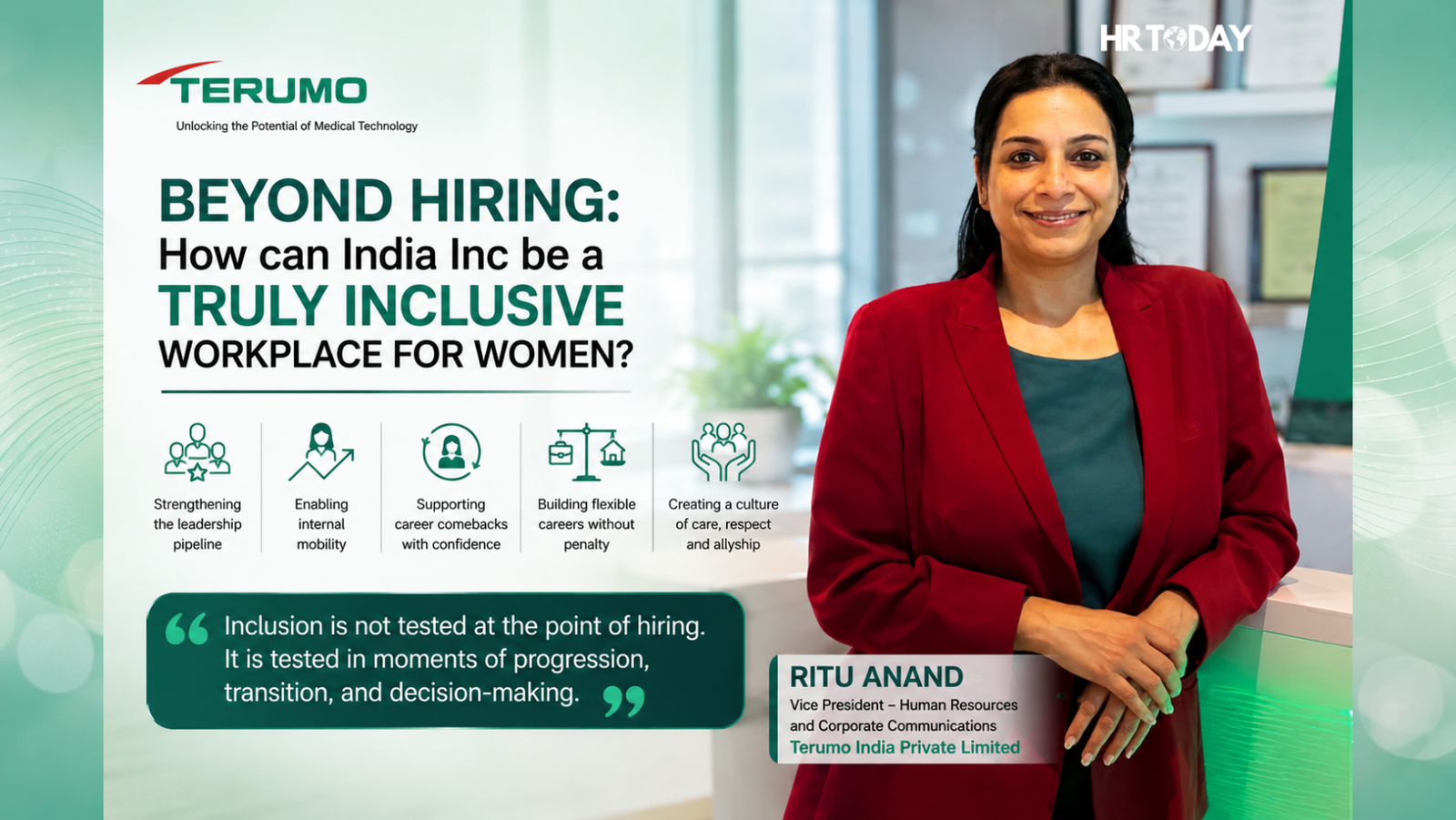
Many women in India’s workforce today have an undeniable resilience that defines their journeys. It comes from ambition, capability, and a quiet determination to keep moving forward, even when the path is not always clear. Over the years, I have seen women take on bigger roles, face difficult challenges, and lead with both empathy and strength.
While organisations have made visible progress in improving gender diversity at entry levels, the real challenge lies in what happens next. Who gets to lead first, who is pushed to take on more responsibilities, and who slowly loses their way as a leader are all questions that need more thought. In many ways, inclusion is not tested at the point of hiring. It is tested in moments of progression, transition, and decision-making.
Strengthening the Leadership Pipeline
One of the most prominent indicators of this imbalance is what is often referred to as the “broken rung” which indicates women are less likely to get the initial promotion to a leadership position and with time, this initial difference gets exaggerated to a more pronounced leadership gap.
There is now a growing need to develop a robust pipeline of women leaders which requires sustained and deliberate effort. It cannot be tackled by individual initiatives or temporary programmes. The Global Gender Gap Report 2025 reflects a positive development, with women occupying nearly 42.9 percent of top economic leadership positions worldwide. In India as well the situation is changing, and the number of women in leadership position is continuously increasing. The challenge is not, then, to generate talent, but to make growth possible.
It involves a shift in mindset. Organisations are increasingly identifying high-potential women early in their careers and investing in their growth through mentorship, leadership programmes, and cross-functional exposure. These efforts go beyond skill building, helping create clearer pathways to leadership and enabling women to take on larger roles with confidence.
At Terumo India, this belief is reflected in a way growth is approached. The associates are motivated to own their own development with a culture of learning and aspiration. Leadership development is more natural and participatory when people are trusted to discover their potential and are given the proper platforms to do so.
Why Internal Mobility Matters More Than Ever
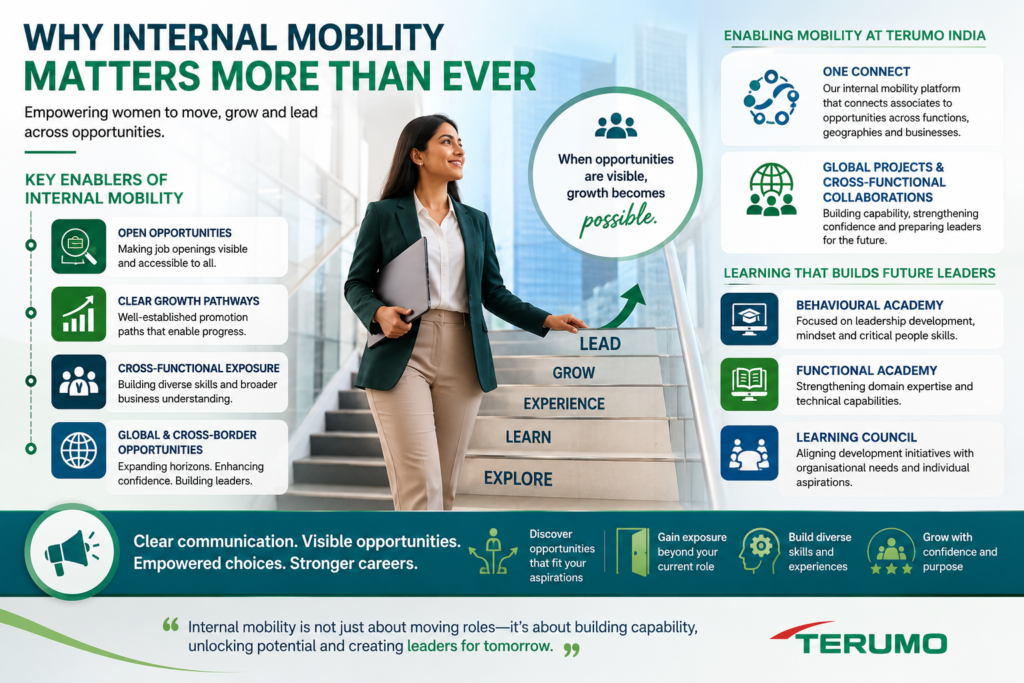
Although hiring more women have assisted in providing a solid base at the entry level, the real impact lies in provided them with the tools to move throughout the organisation. Internal mobility is a very important aspect in the development of leadership pipelines, yet it is often underutilised.
The number of highly qualified women continue to experience slower career progression. This is not necessarily a result of lack of ambition or ability, but rather that of a low visibility of opportunities available. Internal mobility programs help address this by making opportunities more visible and accessible.
Such basic measures like open job postings, well-established promotion pathways, and cross-functional opportunities can make a big difference. These systems enable associates to consider jobs outside their direct work and allow them to develop a wider understanding and a more varied skill base.
This has been facilitated at Terumo India through programs such as the One Connect. The platform helps associates to discover opportunities in different functions and geographies and open them to new opportunities. Participation in global projects and cross-functional collaborations not only builds capability but also enhances confidence, which is equally important for leadership readiness.
Alongside mobility, structured learning plays an important role. We have two virtual universities – the Behavioural Academy and the Functional Academy. The Behavioural Academy focuses on leadership development, while the Functional Academy strengthens domain expertise. These are supported by a dedicated Learning Council that ensures development efforts are aligned with both organisational requirements and individual aspirations.
Not only does the design of these initiatives make them effective, but the way they are communicated. Associates with a clear understanding of how to develop and what opportunities are available are in a better position to make decisions regarding their careers.
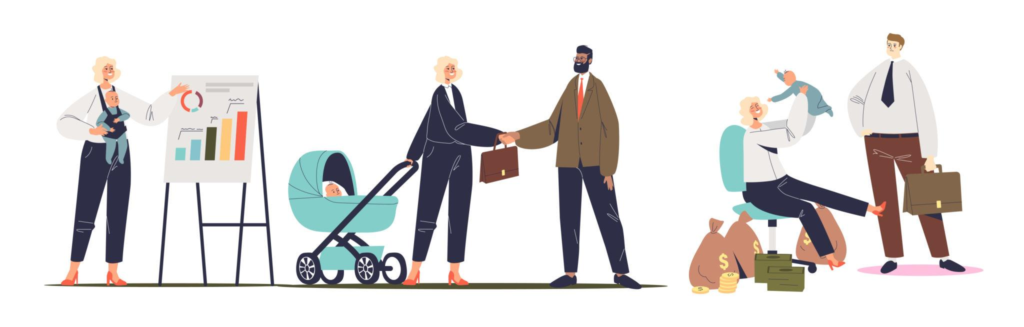
Supporting Career Comebacks with Confidence
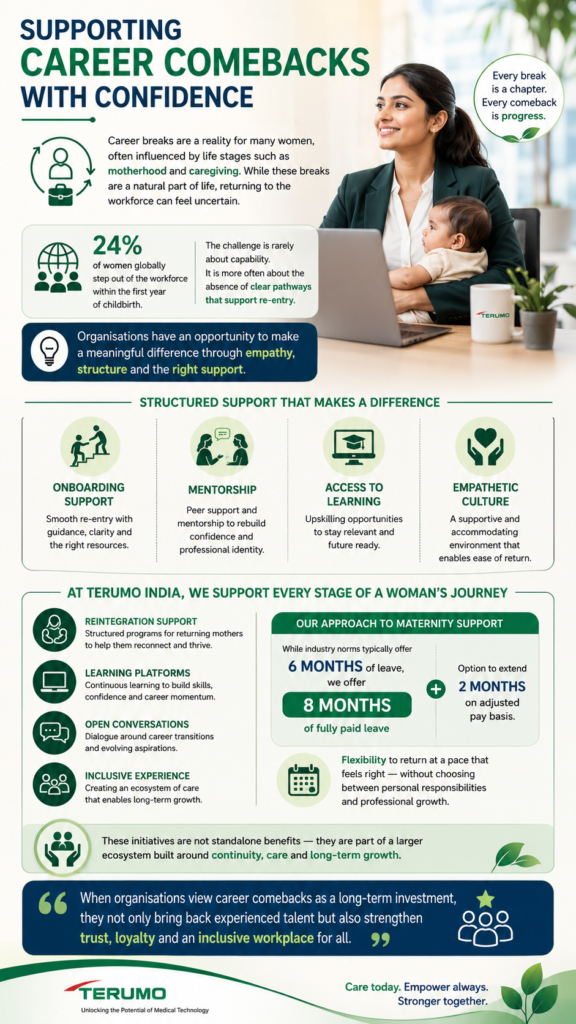
Career breaks are a reality for many women, often influenced by life stages such as motherhood or caregiving. While these breaks are a natural part of life, returning to the workforce can feel uncertain.
What should feel like a continuation of a career often feels like starting again. This is also a broader pattern that organisations need to acknowledge. Studies suggest that nearly 24 percent of women globally step out of the workforce within the first year of childbirth. The challenge is rarely about capability. It is more often about the absence of clear pathways that support re-entry. Changes in industry requirements and evolving skill expectations can add to this uncertainty.
This is where organisations have an opportunity to make a meaningful difference. Structured comeback programs that include onboarding support, mentorship, and access to learning can help women rebuild confidence. Equally important is the environment in which they return. An empathetic and accommodating culture can largely affect the level of comfort people have in going back to work.
At Terumo India, we try to support associates through different life stages in a way that feels practical and meaningful. This includes reintegration support for returning mothers, access to learning platforms, and open conversations around career transitions, all of which help create a more inclusive experience. Our approach to maternity support reflects this thinking as well. While the industry norms typically offer six months of leave, we offer eight months of leave, along with the option to extend it by another two months on an adjusted pay basis. This gives women the flexibility to return at a pace that feels right for them, without the added pressure of having to choose between personal responsibilities and professional growth. Rather than being seen as standalone initiatives, these efforts are part of a larger ecosystem that is built around continuity and long-term growth.
When organisations view career comebacks as a long-term investment, they not only bring back experienced talent but also strengthen trust and loyalty.
Designing Careers That Can Flex with Life
Careers are no longer linear, and a need to have a path to follow may restrict the potential of individuals as well as the development of organisations.
Various life phases affect how and when many women can assume new opportunities. With this realization, organisations are starting to re-examine the way careers are organised.
Lateral moves, temporary assignments, and gradual transitions to more challenging positions can all be considered flexible career pathways. Such strategies enable associates to keep on developing without the necessity to withdraw when personal interests change.
In Terumo India, a culture of trust supports flexibility. Associates are advised to mould their career paths in a manner that suits both their career aspirations and personal lives. This brings in a feeling of ownership and assists people to remain active in the long run.
Flexibility is not just about policies. It is about the mindset. Whenever organisations start perceiving careers as dynamic journeys and not straight paths, they leave room for more inclusive development.
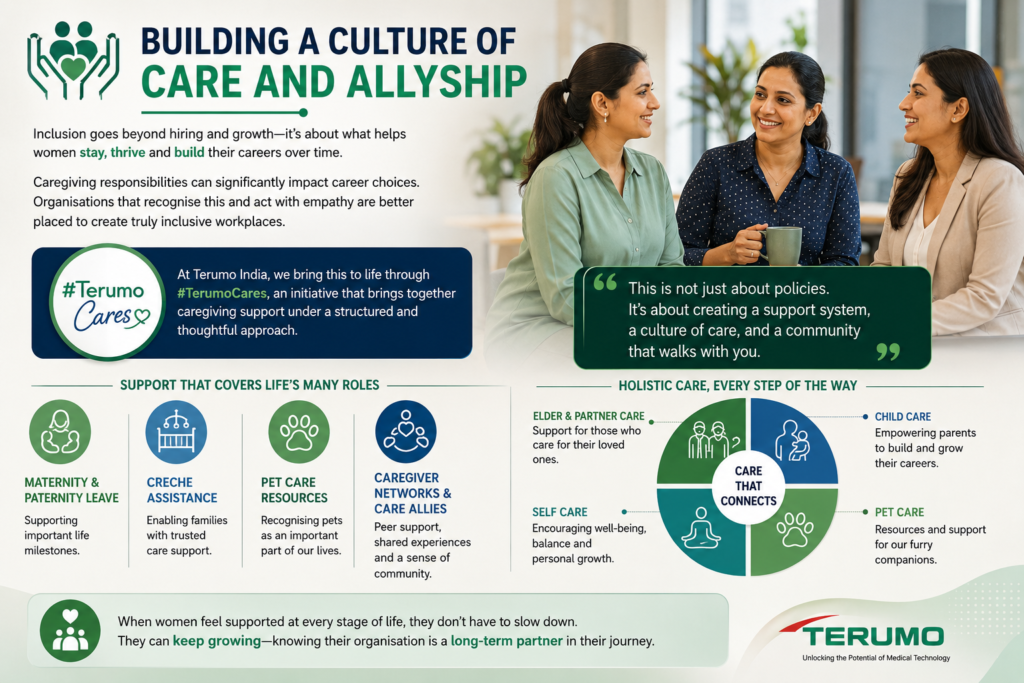
Building a Culture of Care and Allyship
While much of the conversation around inclusion focuses on hiring and growth, what often gets less attention is what helps women stay and continue building their careers over time. Across industries, there is a growing awareness that caregiving responsibilities can have a very tangible impact on career choices. Organisations that recognise this and act accordingly with empathy are in a better position to build genuinely inclusive workplaces.
At Terumo India, this is brought to life through #TerumoCares, an initiative that brings together caregiving support under a more structured and thoughtful approach. It covers benefits like maternity and paternity leave, creche assistance, and pet care resources, which are meant to capture the diverse realities associates face. The difference here is the focus on creating a support system around these policies. Caregiver Networks and Care Allies provide associates with peer discussions, experience sharing, and a feeling of community as they balance their duties at various life stages.
By bringing together support for elder and partner care, child and pet care, and self-care, the emphasis is no longer on isolated benefits but on a more better experience of support. This is important in making women feel that they need not slow down with the changes in their lives and that the organisation is with them as a long-term partner in their journey
The Role of Culture in Everyday Inclusion
Inclusion is usually influenced by daily experiences, treatment, reception of ideas, and the comfortability of individuals to express themselves.
Associate Resource Groups have become an effective means of developing this culture. These groups establish a platform where they can share, relate, and learn together, and the associates support each other and develop together.
This is brought to life at Terumo India by YUME, the Women Associate Resource Group. It is named after the Japanese word meaning dream, and the aim is to make an environment where women associates feel free to follow their dreams.
YUME unites various programs involving personal and professional growth. These include leadership talk series, learning interventions, reintegration support for returning mothers and health and wellbeing programmes. Engagement platforms like newsletters and events are also available and contribute to creating a sense of community.
What makes YUME meaningful is its inclusivity. It has resources accessible to associates at different levels including early career professionals and senior leaders. Women associates can find their career paths more straightforward through a systematic process that involves self-reflection, managerial collaboration and individualised career development plans.
Meanwhile, YUME is a bridge between associates and management. It facilitates discussions that might not necessarily occur in the formal environment, which can assist organisations to learn more and react to the changing demands.
Companies that are proactive in such initiatives, with leadership involvement and intent, are better placed to instill a culture of belonging.
Moving Beyond Hiring to True Inclusion
As organisations continue to focus on diversity, there is a need to move beyond hiring numbers and look more closely at inclusion.
In order to create real inclusion in the workplace, both considerate systems and powerful culture have to be combined. Career pathways, life-long learning, flexibility, and a sense of belonging are all important.
At Terumo India, there has been an emphasis on the development of a culture where associates are enabled to develop and contribute. Inclusion is not a one-off program, but a system of constant action that appreciates people and enables growth at all levels.
With the workplaces transforming as they are, the actual opportunity is to make space where women do not need to constantly adapt to fit in but are assisted to develop as they are. Once that begins to happen, inclusion becomes less of an effort and more of a natural part of the culture.
Read Also : When Technology, Business, and HR Converge: Why Embedding Ethical AI at Scale Matters
Burnout Isn’t a Time Management Problem—It’s a Leadership Problem
Learning, Education and Pedagogy in the age of AI : Developing Human Capital for the coming Decades
Rethinking Talent in the Age of AI: Why Workforce Agility Starts with the 4Bs
The Rise of the Chief Human Agency Officer: Why Every AI Organization Will Soon Need One