


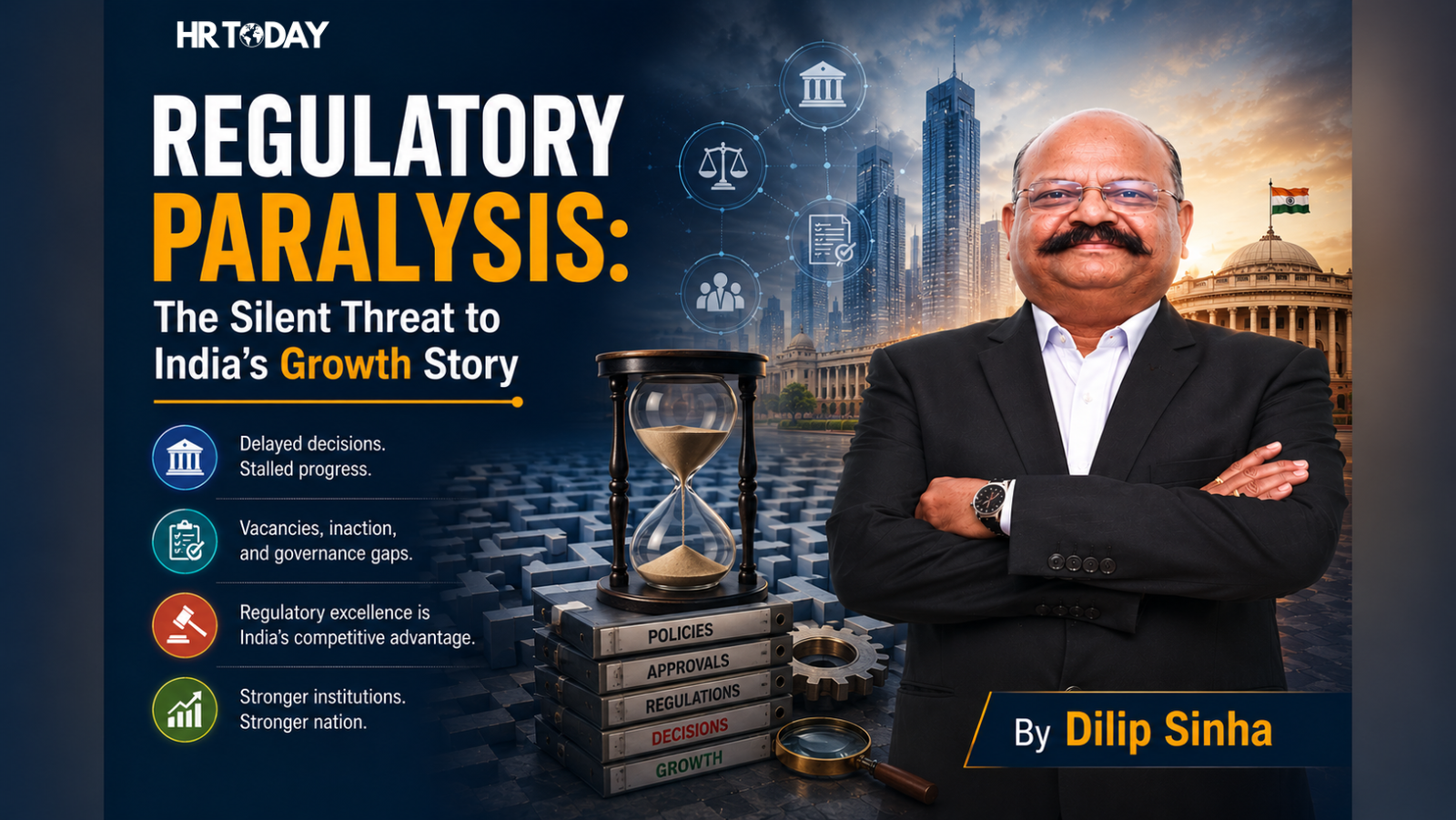
India’s economic journey over the past three decades has been powered by liberalization, entrepreneurship, technology adoption, and market reforms. As industries became increasingly complex and specialized, the traditional machinery of government administration could no longer provide the focused oversight, guidance, and governance required to support emerging sectors. This led to the creation of specialized regulatory institutions such as SEBI, TRAI, IRDAI, RERA, and numerous sector-specific authorities entrusted with shaping the future of their respective domains.
The logic behind these institutions was sound. Specialized sectors require specialized knowledge, quicker decision-making, and regulatory foresight. Regulators were expected not merely to enforce compliance but also to facilitate growth, encourage innovation, protect stakeholders, and provide strategic direction to rapidly evolving industries. Alongside these regulators, numerous tribunals and adjudicatory bodies were established to provide faster, domain-specific dispute resolution while reducing the burden on conventional courts.
However, the reality today presents a worrying picture. Several tribunals remain understaffed, key positions remain vacant for prolonged periods, and many adjudicatory mechanisms struggle to function at their intended capacity. The Supreme Court of India has on multiple occasions expressed concern regarding vacancies and delays in tribunal appointments. When dispute resolution mechanisms fail to function effectively, the broader regulatory framework itself loses credibility and effectiveness.
More concerning is the growing perception that many regulators have gradually evolved into extensions of conventional government departments rather than becoming dynamic institutions capable of anticipating future challenges. In sectors such as telecommunications, insurance, real estate, digital services, data governance, and emerging technologies, one would expect regulators to act as catalysts for innovation and architects of future-ready frameworks. Instead, stakeholders often experience prolonged delays, reactive policymaking, and incremental regulatory responses to transformational challenges.
The role of a regulator should extend far beyond issuing circulars and enforcing compliance. Effective regulators should identify emerging risks, create enabling environments for innovation, balance stakeholder interests, and provide strategic clarity to investors and businesses. In rapidly changing sectors, regulatory uncertainty can be as damaging as regulatory excess. Delayed decisions often translate into delayed investments, stalled innovation, reduced competitiveness, and lost economic opportunities.
The challenge becomes even more pronounced in traditional sectors. Areas such as food safety, fire safety, environmental governance, urban planning, and public infrastructure continue to face significant implementation gaps despite the existence of regulatory frameworks. In some sectors, regulatory institutions have become so distant from public consciousness that many citizens barely recognize their role or impact.
A nation’s growth trajectory depends not only on economic policy but also on the quality of its institutions. Investors seek predictability. Businesses seek clarity. Citizens seek accountability. Innovation ecosystems seek encouragement rather than uncertainty. When regulators fail to provide timely direction, all stakeholders suffer.
The consequences of regulatory paralysis extend beyond administrative inefficiency. They affect capital allocation, business confidence, innovation velocity, public trust, and national competitiveness. Countries that succeed in the coming decades will not necessarily be those with the largest markets, but those with the most agile and effective institutions capable of balancing innovation with accountability.
India stands at a pivotal moment in its development journey. As the nation aspires to become a global economic powerhouse, regulatory excellence must become a national priority. Regulators must attract domain experts, leverage technology, strengthen accountability mechanisms, and embrace a more proactive leadership role. They must evolve from being rule administrators to becoming strategic enablers of national progress.
Regulatory paralysis is not merely a governance issue. It is a strategic risk. Left unaddressed, it can quietly slow economic momentum and undermine growth aspirations. Addressed effectively, however, it can become one of the strongest foundations for India’s next phase of development and global leadership.
Read Also : How HR Leaders Are Redefining Talent Development for the Future of Work
Selective Increments, Strategic Hiring: How AI Skills Are Reshaping India Inc’s Appraisal Cycle
From Org Charts to Skill Graphs: The Reinvention of Enterprise Design
Rethinking Talent in the Age of AI: Why Workforce Agility Starts with the 4Bs
The HR Leader’s Real AI Problem Is Not Adoption. It Is Architecture.